

Table of Contents
Hermetic piston compressors are widely used in industrial and commercial refrigeration systems due to their reliability, efficiency, and compact design. As a leading manufacturer of hermetic piston compressors, we understand the importance of providing both high-quality products and informative guidance for engineers, business owners, and system operators. This guide covers everything from working principles to maintenance tips, helping you make informed decisions while optimizing system performance.
What is a Hermetic Piston Compressor?

A hermetic piston compressor is a type of positive displacement compressor where the motor and compressor are enclosed in the same sealed housing. This design ensures a leak-proof environment, reducing the risk of refrigerant escape and improving reliability.
Key components include the piston assembly, crankshaft, motor, and valves. The motor is directly coupled with the compressor, eliminating the need for external couplings or belts, which reduces maintenance requirements.
Compared to semi-hermetic compressors, piston compressors offer a more compact and sealed design, ideal for applications where space and reliability are critical.
How Piston Compressors Work
The working principle of a piston compressor is straightforward. The piston moves inside a cylinder, compressing refrigerant gas during the upward stroke and pushing it out through discharge valves. During the downward stroke, the cylinder refills with refrigerant through suction valves.
Common refrigerants used in piston compressors include R134a, R404A, and R410A, each selected based on system requirements and environmental regulations.
Energy efficiency is influenced by piston design, motor efficiency, and refrigerant selection. Modern hermetic piston compressors often include high-efficiency motors to reduce energy consumption while maintaining optimal performance.
Applications of Hermetic Piston Compressors
Hermetic piston compressors are versatile and used in a range of applications:
- Industrial Refrigeration Systems: Large-scale cold storage facilities, food processing plants, and beverage production lines.
- Commercial HVAC Systems: Air conditioning units in commercial buildings and shopping malls.
- Specialty Applications: Medical refrigeration, laboratories, and pharmacies where precise temperature control is critical.
Advantages of Using Hermetic Piston Compressors
Hermetic piston compressors are favored for multiple reasons:
- Long Lifespan and Reliability: The sealed design reduces wear and contamination, extending operational life.
- High Efficiency: Optimized piston design and motor integration improve energy use.
- Compact and Space-Saving: Ideal for installations with limited room.
- Low Maintenance Requirements: Fewer moving parts and sealed housing minimize maintenance costs.
How to Choose the Right Hermetic Piston Compressor
Selecting the right piston compressor requires consideration of several factors:
- Capacity Matching: Ensure the compressor can handle your system’s cooling or heating load.
- Type Comparison: Evaluate hermetic vs scroll or semi-hermetic compressors for efficiency and application suitability.
- Brand and Manufacturer Reliability: Choosing a reputable manufacturer ensures better quality, warranties, and technical support.
Table: Key Selection Factors for Hermetic Piston Compressors
| Factor | Consideration | Recommended Approach |
|---|---|---|
| Capacity | System cooling/heating load | Match compressor rating to peak load |
| Type | Hermetic, semi-hermetic, scroll | Compare efficiency, size, and maintenance |
| Refrigerant | R134a, R404A, R410A | Choose based on system compatibility and environmental rules |
| Noise Level | dB rating | Select low-noise models for sensitive environments |
| Manufacturer | Quality assurance | Prefer established, direct manufacturers |
Maintenance Tips for Piston Compressors
Routine maintenance is essential for long-term performance:
- Regular Inspections: Check for oil levels, refrigerant leaks, and unusual noises.
- Cleaning Components: Keep valves, suction and discharge lines free of dirt and debris.
- Lubrication: Use manufacturer-recommended lubricants for moving parts.
- Part Replacement: Replace worn-out valves, gaskets, or seals promptly to avoid system damage.
Common Problems and Solutions
Even high-quality compressors may experience issues:
- Overheating and Noise: Often caused by blocked airflow or insufficient lubrication; solution: clean vents and check oil levels.
- Refrigerant Leaks: Check seals and welds; ensure proper refrigerant charge.
- Electrical or Mechanical Faults: Regular inspection and professional troubleshooting can prevent major downtime.
Technical Specifications to Consider
When selecting a piston compressor, these specifications are crucial:
- Capacity and Power Rating: Ensure alignment with your system requirements.
- Voltage Options: Match the electrical infrastructure.
- Noise and Vibration: Especially important for commercial or indoor applications.
- Efficiency Rating: Higher-rated compressors reduce operational costs and energy consumption.
Why Choose a Manufacturer Directly
Purchasing directly from the manufacturer offers several advantages:
- Quality Assurance: Direct access to original components and strict testing protocols.
- Warranty and Support: Easier claims and faster technical assistance.
- Customization Options: Ability to tailor compressors for specific industrial or commercial applications.
Future Trends in Hermetic Piston Compressors
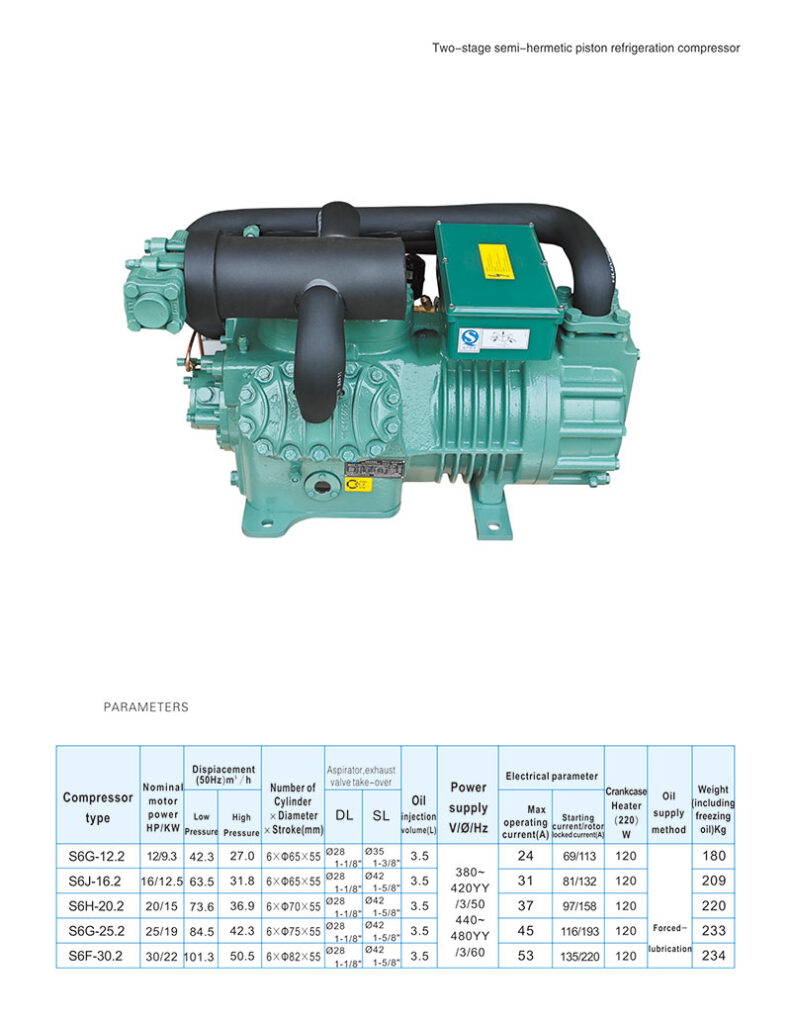
The industry is evolving with innovations that improve performance and sustainability:
- Energy Efficiency Innovations: High-efficiency motors and optimized piston design.
- Eco-Friendly Refrigerants: Transition to low-GWP refrigerants to meet environmental standards.
- Smart Monitoring: Integration of IoT sensors for predictive maintenance and performance tracking.
Conclusion
Hermetic piston compressors combine reliability, efficiency, and compact design, making them an ideal choice for industrial, commercial, and specialty refrigeration applications. As a manufacturer, we prioritize quality, performance, and customer support, ensuring every system operates optimally. By understanding applications, maintenance, and selection criteria, you can maximize efficiency and longevity while reducing operational costs.
Explore our range of high-quality hermetic piston compressors today, and contact us for custom solutions tailored to your specific needs.
FAQ
1. What is a hermetic piston compressor?
A hermetic piston compressor is a sealed unit where the motor and compressor are enclosed together, providing leak-proof operation, high reliability, and compact design.
2. How does a hermetic piston compressor work?
It compresses refrigerant gas using a piston moving inside a cylinder. The motor drives the piston, pushing refrigerant through valves for cooling or HVAC applications.
3. What are the main advantages of a hermetic piston compressor?
Key benefits include energy efficiency, low maintenance, long lifespan, compact design, and suitability for industrial, commercial, and specialty refrigeration systems.
4. How do I maintain a hermetic piston compressor?
Regular inspections, cleaning valves and suction lines, checking oil levels, and timely replacement of worn parts help maintain optimal performance and extend service life.
5. How do I choose the right hermetic piston compressor for my application?
Consider system capacity, refrigerant compatibility, efficiency rating, noise level, and buy directly from a trusted manufacturer to ensure quality and support.
