

Table of Contents
Introduction
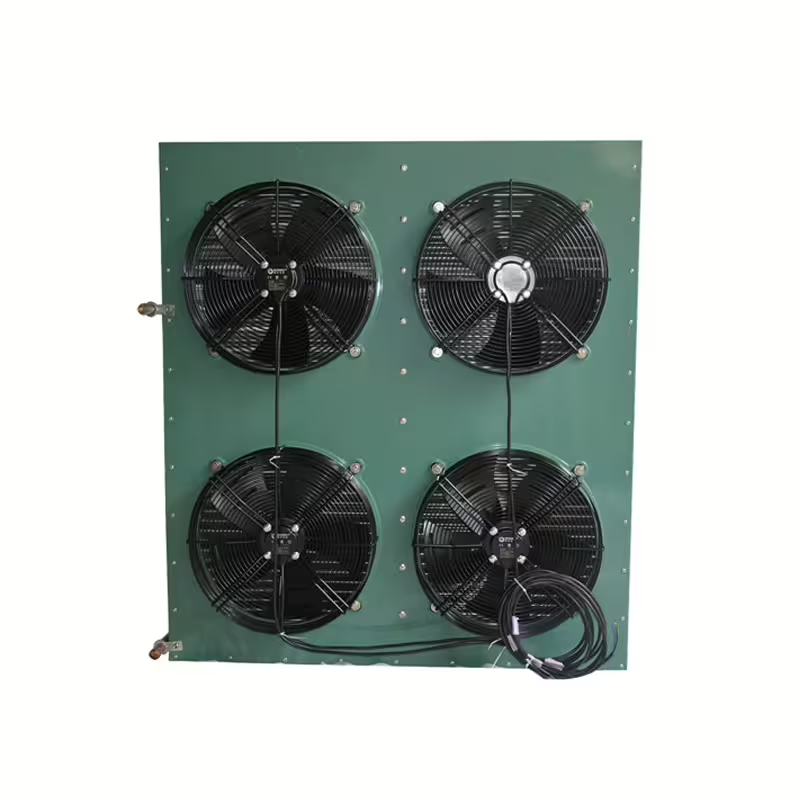
Small refrigeration units have become essential for businesses across foodservice, healthcare, laboratories, and retail. These compact cooling systems deliver industrial-grade performance in limited spaces, ensuring precise temperature control and reliable operation. Whether you need to store perishable goods, sensitive materials, or beverages, selecting the right small refrigeration unit directly impacts product quality, energy costs, and operational efficiency.
Why Small Refrigeration Units Are Essential for Modern Businesses
In today’s competitive market, businesses face increasing pressure to reduce waste, lower operational costs, and maintain strict quality standards. A well-chosen small refrigeration unit helps address all three challenges simultaneously. These compact systems enable efficient space utilization—particularly valuable in urban locations where every square foot matters. For businesses requiring consistent cooling 24/7, industrial-grade small refrigeration units provide the reliability that residential or light-commercial equipment simply cannot match.
Applications Across Industries: From Foodservice to Laboratories
Small refrigeration units serve diverse business needs across multiple sectors:
- Restaurants and cafés: Under-counter and back-bar coolers keep ingredients and beverages at optimal temperatures while preserving valuable floor space
- Laboratories and medical facilities: Precision-controlled units store vaccines, reagents, and samples with temperature stability critical to product integrity
- Retail stores: Compact display refrigerators maximize product visibility while maintaining consistent cooling
- Mobile businesses: Food trucks, catering services, and field operations rely on portable refrigeration that withstands transit conditions
Key Advantages of Investing in Industrial-Grade Units
Industrial-grade small refrigeration units offer distinct advantages over standard commercial models. These systems typically achieve higher energy efficiency ratios, with COP (Coefficient of Performance) values often exceeding 2.5 for compressor-based designs. The robust construction—featuring stainless steel interiors, reinforced components, and advanced insulation—provides longer service life and reduces maintenance frequency. Most importantly, industrial-grade units maintain precise temperatures under heavy usage patterns and fluctuating ambient conditions.
Definition and Core Components
A small refrigeration unit is a compact cooling system designed to maintain specific temperature ranges for limited storage volumes or specialized processes. Industrial-grade units incorporate four essential components working in coordination: a high-efficiency micro compressor, condenser for heat rejection, evaporator for heat absorption, and an expansion device. Advanced models feature digital controllers that monitor and adjust system parameters in real-time for optimal performance.
Cooling Capacity and Energy Efficiency Standards
Cooling capacity for small refrigeration units typically ranges from 100W to several kilowatts, depending on application requirements. Energy efficiency measurement focuses on COP values and energy consumption ratios. Modern industrial-grade units achieve COP values between 1.5 and 3.0, significantly reducing operating costs compared to older technologies. Many models now comply with ENERGY STAR requirements and utilize low-GWP (Global Warming Potential) refrigerants like R290 or CO₂ (R744).
Differences Between Commercial and Residential Units
The distinction between commercial and residential refrigeration extends beyond size. Commercial units must withstand frequent door openings, higher ambient temperatures, and continuous operation requirements. Industrial-grade small refrigeration units feature heavy-duty compressors, enhanced insulation, and more precise temperature controls. These systems prioritize rapid temperature recovery and stable operation under variable load conditions—essential for business applications where product quality directly impacts revenue.
Top Features to Look for in a Small Refrigeration Unit
Compact Design for Limited Spaces
Effective space utilization represents a primary advantage of small refrigeration units. Under-counter models fit seamlessly beneath prep tables, while back-bar units maximize beverage storage in service areas. Modular designs allow multiple units to be combined for expanded capacity without sacrificing floor space. When selecting a unit, carefully measure the installation area and consider door swing requirements for optimal workflow integration.
Temperature Control and Stability
Digital temperature controllers provide precise setpoint management with minimal deviation—typically within ±0.5°C for critical applications. Advanced units feature multiple sensors monitoring interior conditions, ambient temperature, and door status. This data enables intelligent defrost cycles and adaptive compressor operation, maintaining consistent conditions while reducing energy consumption. Alarms notify staff of temperature excursions before products are compromised.
Noise Levels and Vibration Reduction
In customer-facing areas, noise levels significantly impact customer experience. Industrial-grade small refrigeration units incorporate sound-insulated compressor compartments, vibration-dampening mounts, and variable-speed fans that reduce operational noise. Premium models operate below 45dB during normal operation—comparable to a quiet library. For laboratory or healthcare settings, ultra-quiet options minimize disturbance to sensitive operations.
Energy-Efficient Components and Certifications
High-efficiency micro compressors with variable-speed operation adjust cooling output to match actual demand, eliminating unnecessary energy consumption. LED interior lighting generates minimal heat while providing excellent visibility. Look for ENERGY STAR certification or equivalent efficiency ratings. These certified models typically consume 20-30% less energy than conventional units, delivering substantial cost savings over the equipment’s service life.
How to Choose the Right Small Refrigeration Unit for Your Business
Evaluating Your Storage Needs and Volume Requirements
Begin by calculating your maximum storage requirements during peak periods. Consider product types—beverages, dairy, meats, or sensitive materials—as different categories require different temperature zones. Measure available space carefully, accounting for required clearances for proper airflow and service access. Remember that adequate capacity reduces the frequency of restocking and door openings, indirectly improving efficiency.
Assessing Energy Consumption and Operating Costs
Review the unit’s energy consumption specifications carefully. Look for rated power input in watts or kilowatts alongside estimated annual consumption figures. Compare energy efficiency ratios between similar capacity units. While high-efficiency models may have higher initial costs, the energy savings often provide payback within 2-3 years for high-usage applications. Factor in local electricity rates for accurate operating cost projections.
Considering Durability and Material Quality
Industrial-grade small refrigeration units typically feature stainless steel interiors that resist corrosion and facilitate cleaning. Reinforced door hinges and heavy-duty handles withstand frequent use without failure. For mobile or outdoor applications, verify weather-resistant construction and marine-grade components. Check warranty terms carefully—industrial-grade models typically offer 2-3 year compressor warranties compared to 1 year for commercial-grade equipment.
Maintenance Tips for Longevity and Performance

Routine Cleaning and Condenser Care
Establish a regular cleaning schedule for condenser coils—typically every 1-3 months depending on environmental conditions. Dirty coils reduce heat transfer efficiency, forcing the compressor to work harder and consume more energy. Use a soft brush or vacuum to remove dust and debris. Clean door gaskets monthly with mild soap solution to maintain seals and prevent air leaks.
Checking Refrigerant Levels and Seals
Monitor system performance for signs of refrigerant loss, such as inadequate cooling or increased compressor run times. While modern industrial-grade systems are typically sealed and require no refrigerant maintenance for years, physical damage or manufacturing defects can cause leaks. Inspect door seals regularly for cracks or deformation—even small gaps can significantly impact efficiency and cause frost buildup.
Troubleshooting Common Issues
Most operational issues fall into identifiable categories: inadequate cooling typically indicates dirty coils or restricted airflow; excessive cycling often points to door seal problems or improper loading; unusual noises may signal component wear. Before calling service, verify that the unit has adequate clearance around it and that vents are not obstructed. Many performance issues resolve with basic cleaning and adjustment.
When to Contact the Manufacturer for Service
Contact the manufacturer or authorized service provider for refrigerant-related issues, compressor failure, or electronic control problems. Attempting repairs on sealed refrigeration systems without proper training can be dangerous and may void warranties. Keep the model and serial number readily available to expedite service requests. Manufacturer-direct service relationships often provide faster response times and genuine parts.
Comparing Small Refrigeration Units: Industrial vs Compact Models
Size, Capacity, and Portability
Industrial-grade small refrigeration units prioritize performance over portability. These systems typically weigh more and incorporate heavier components for durability. Compact models emphasize lightweight construction for mobility. The table below summarizes key differences between categories:
| Feature | Industrial-Grade Units | Compact Commercial Units |
|---|---|---|
| Cooling Capacity | 500W – 5kW | 100W – 500W |
| Temperature Range | -40°C to +20°C | -18°C to +10°C |
| COP Efficiency | 2.0 – 3.5 | 1.2 – 2.0 |
| Noise Level | 40-50 dB | 45-60 dB |
| Service Life | 12-15 years | 5-8 years |
| Weight | 30-100 kg | 10-30 kg |
| Compressor Type | Heavy-duty rotary/scroll | Light rotary/piston |
| Warranty | 2-3 years compressor | 1 year compressor |
Performance Under Continuous Operation
Industrial-grade small refrigeration units are engineered for continuous 24/7 operation with minimal degradation. Heavy-duty compressors, oversized condensers, and robust electronic controls provide stable performance under demanding conditions. Compact commercial models typically assume periodic operation cycles and may experience accelerated wear under continuous use. For critical applications requiring uninterrupted cooling, industrial-grade equipment represents the more reliable investment.
Cost vs Value Analysis
While industrial-grade small refrigeration units require higher initial investment, the total cost of ownership often proves lower over the equipment’s lifespan. Factors contributing to this value proposition include longer service intervals, reduced energy consumption, lower failure rates, and improved product preservation. Calculate total ownership costs over a 5-10 year period to make accurate comparisons between equipment categories.
Benefits of Purchasing Directly from the Manufacturer
Customization Options for Business Needs
Manufacturers can modify standard designs to meet specific application requirements. Customization options include alternative refrigerants for environmental compliance, specialized temperature ranges for unique products, voltage configurations for international use, and interface modifications for integration with building management systems. For OEM applications, manufacturers can develop completely bespoke solutions incorporating their proprietary technology.
Better Warranty and Support Services
Direct purchasing relationships typically provide enhanced warranty terms compared to third-party purchases. Manufacturers may offer extended compressor warranties, priority service access, and dedicated technical support familiar with your specific equipment. These direct relationships prove valuable during commissioning, troubleshooting, and long-term maintenance planning.
Access to Latest Industrial-Grade Models
Manufacturers continuously introduce technological improvements in efficiency, control systems, and environmental performance. Direct customers gain early access to these innovations, enabling competitive advantages through reduced operating costs and enhanced capabilities. Subscription relationships with manufacturers often provide notification of relevant product updates and technical improvements.
Energy Efficiency and Environmental Considerations
Low Power Consumption Solutions
Variable-speed compressors represent the most significant efficiency advancement in modern small refrigeration units. By adjusting compressor speed to match actual cooling demand, these systems eliminate energy waste associated with traditional on-off cycling. Advanced control algorithms optimize compressor operation based on door opening patterns, ambient conditions, and internal load characteristics. LED lighting provides additional efficiency gains compared to traditional incandescent bulbs.
Compliance with Environmental Standards
Environmental regulations increasingly restrict refrigerants with high global warming potential. Industrial-grade small refrigeration units now commonly utilize natural refrigerants like R290 (propane) with GWP of 3 or CO₂ (R744) with GWP of 1. These alternatives meet current and anticipated future regulations while providing excellent thermodynamic properties. Verify refrigerant type against applicable regulations in your operating region.
Reducing Carbon Footprint in Commercial Operations
Energy-efficient small refrigeration units directly reduce operational carbon emissions through lower electricity consumption. Additionally, the use of low-GWP refrigerants minimizes direct emissions potential in case of system leaks. Lifecycle assessments show that efficient refrigeration equipment with environmentally preferable refrigerants can reduce overall carbon footprint by 30-50% compared to conventional alternatives.
Case Studies and Real-World Applications

Restaurants and Cafés: Keeping Food Fresh Efficiently
A busy café chain upgraded their under-counter refrigeration to industrial-grade small refrigeration units with variable-speed compressors. The new units reduced energy consumption by 35% while improving temperature stability by 40%. Food waste decreased significantly due to more consistent holding temperatures, providing payback within 18 months through energy and food cost savings.
Laboratories: Ensuring Safe Storage for Sensitive Materials
A research laboratory installed precision small refrigeration units for vaccine storage. The selected units provided ±0.3°C temperature stability with continuous monitoring and alarm functions. Data logging capabilities simplified compliance documentation during regulatory inspections. The laboratory reported zero temperature excursions over a two-year monitoring period, compared to multiple incidents with previous equipment.
Retail Businesses: Maximizing Space Without Sacrificing Performance
A convenience store chain implemented compact under-counter refrigeration at checkout locations. The small refrigeration units increased impulse purchase opportunities while improving store aesthetics. Energy-efficient models maintained product quality despite frequent door openings from customers. The chain reported a 12% sales increase for products moved to the new refrigeration display locations.
Conclusion
Choosing the right industrial-grade small refrigeration unit represents a strategic business decision affecting product quality, operational costs, and compliance requirements. The initial investment in quality equipment typically delivers substantial returns through reduced energy consumption, lower product waste, and decreased maintenance requirements. Purchasing directly from manufacturers provides access to customization options, enhanced support services, and the latest technological advancements.
As environmental regulations continue tightening and energy costs increase, selecting efficient small refrigeration units with low-GWP refrigerants positions your business for future compliance and cost control. Evaluate your specific application requirements carefully, calculate total ownership costs, and choose equipment that matches your operational demands while providing growth capacity.
Investing in industrial-grade small refrigeration technology represents more than equipment purchase—it’s a strategic commitment to operational excellence and sustainable business practices. The right equipment delivers reliability that protects your products, efficiency that reduces your costs, and quality that supports your brand reputation.
FAQ
What Is the Difference Between a Small Refrigeration Unit and a Mini Fridge?
While similar in appearance, small refrigeration units designed for industrial or commercial applications feature heavier-duty components, more precise temperature control, and greater durability. Mini fridges typically serve light-duty residential applications with simpler construction and less demanding performance requirements. Industrial-grade units prioritize reliability and efficiency over lowest initial cost.
How Long Does an Industrial-Grade Unit Last?
With proper maintenance, industrial-grade small refrigeration units typically provide 12-15 years of reliable service. The heavy-duty construction, quality components, and conservative operating specifications contribute to extended service life. Regular cleaning and preventive maintenance significantly impact longevity—neglected units may fail prematurely even with robust construction.
Can I Use a Portable Unit for My Business?
Portable small refrigeration units can serve temporary or mobile applications effectively. However, for permanent installations or critical applications requiring continuous operation, fixed industrial-grade equipment provides superior reliability, efficiency, and performance. Evaluate duty cycle requirements carefully before choosing portable solutions for business applications.
What Maintenance Is Required for Peak Efficiency?
Basic maintenance includes regular condenser coil cleaning, door gasket inspection and cleaning, interior sanitation, and performance monitoring. Keep detailed maintenance records to track component wear and optimize service intervals. Follow manufacturer-recommended maintenance schedules specific to your usage patterns and environmental conditions. Professional service should address refrigerant issues and major components.
