

An air cooled condensing unit is one of the most practical refrigeration solutions for cold rooms, freezer rooms, food storage facilities, supermarkets, processing plants, pharmaceutical storage, and many industrial cooling projects. It combines key refrigeration components into a compact system and rejects heat directly to the surrounding air without requiring a water cooling loop.
For buyers, contractors, and project owners, the challenge is not simply finding a unit that “can cool.” The real challenge is selecting an air cooled condensing unit that matches the cold room load, installation environment, temperature range, airflow condition, maintenance plan, and long-term operating requirements.
A poorly selected unit may cause unstable room temperature, compressor stress, excessive energy use, difficult maintenance, high noise complaints, and shorter equipment life. A properly selected unit can make the whole refrigeration system more reliable, easier to install, and more suitable for commercial or industrial use.
This guide explains how to choose an air cooled condensing unit from a practical buyer’s perspective, especially for cold room and industrial refrigeration projects.
Table of Contents
What Is an Air Cooled Condensing Unit?

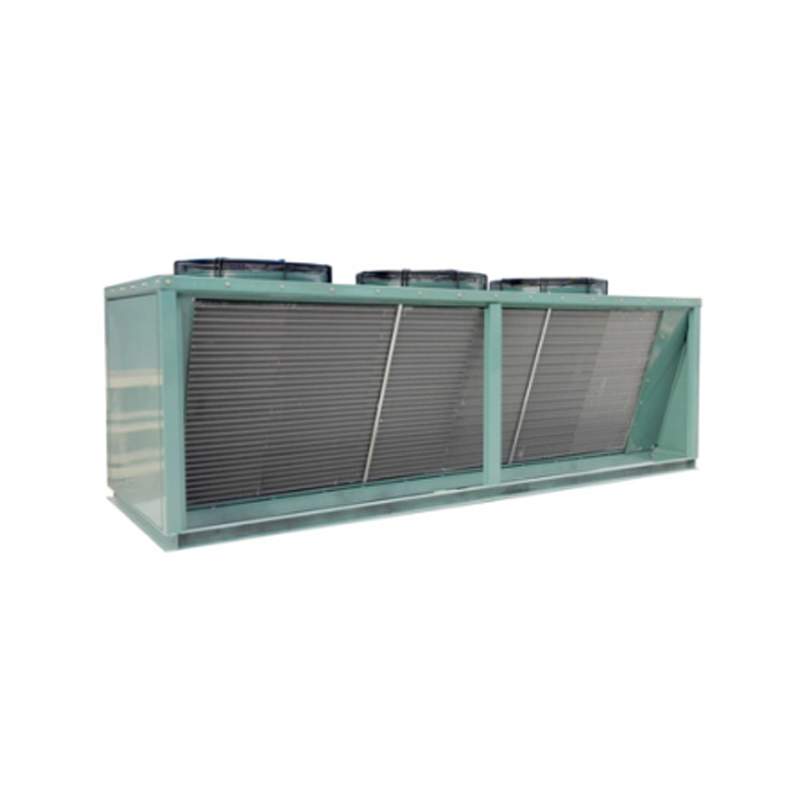
An air cooled condensing unit is a refrigeration assembly that usually includes a compressor, air cooled condenser, fan motor, control components, piping connections, and protective housing or frame. Its main function is to compress refrigerant vapor, reject heat through the condenser coil, and prepare the refrigerant for the next stage of the refrigeration cycle.
In a vapor-compression refrigeration system, heat is absorbed inside the cold room through the evaporator and then released outside through the condenser. For a technical overview of how this cycle works, the basic refrigeration principle is explained in vapor-compression refrigeration.
In practical cold storage projects, the condensing unit is often installed outside the cold room, on a rooftop, beside a building, in a machine area, or in another ventilated location. The evaporator is installed inside the cold room to absorb heat from the storage space.
Rongyi Cold provides different compression condensing unit options for commercial and industrial refrigeration applications, including open-type air-cooled units, box-type cooling units, and water-cooled solutions for different project conditions.
Why Air Cooled Condensing Units Are Popular in Cold Room Projects
Air cooled condensing units are widely used because they are relatively simple to install, do not require cooling water, and can support many refrigeration applications. For many small and medium cold storage projects, they offer a good balance between equipment structure, installation convenience, and maintenance accessibility.
The biggest advantage is that an air cooled system uses ambient air to reject heat. This means the project does not need a cooling tower, water pump, water treatment system, or water piping network. For buyers in locations where water supply is limited, water quality is poor, or maintenance teams are not specialized in water systems, this can simplify the project.
An air cooled condensing unit is often suitable for:
Cold rooms for food storage
Freezer rooms for frozen products
Supermarket refrigeration systems
Restaurant and hotel kitchen storage
Agricultural product storage
Medical and pharmaceutical storage
Small and medium industrial cooling rooms
Logistics and distribution cold storage
For projects that require compact equipment and easier installation, Rongyi Cold’s box type cooling unit is one example of a packaged configuration designed for applications such as food, medical machinery, biopharmaceutical, and chemical refrigeration.
Air Cooled Condensing Unit vs Water Cooled Condensing Unit
One common buyer question is whether an air cooled condensing unit or a water cooled condensing unit is better. The answer depends on the project environment.
An air cooled unit rejects heat through air. A water cooled unit rejects heat through water or a water-based heat exchange system. Air cooled systems are usually simpler and more independent, while water cooled systems may be preferred in certain high-load or space-limited environments.
| Comparison Factor | Air Cooled Condensing Unit | Water Cooled Condensing Unit |
|---|---|---|
| Heat rejection method | Ambient air | Water or water loop |
| Installation complexity | Usually simpler | Usually more complex |
| Water requirement | Not required | Required |
| Maintenance focus | Coil cleaning, fan inspection, airflow | Water quality, scale, pumps, heat exchanger |
| Common applications | Cold rooms, supermarkets, food storage, commercial refrigeration | Industrial cooling, high ambient conditions, special equipment rooms |
| Space requirement | Needs enough ventilation around condenser | Needs water system and auxiliary equipment |
| Best-fit buyer | Wants simple installation and lower water-system complexity | Has water infrastructure and higher heat rejection needs |
For projects where water cooling is more suitable, Rongyi Cold also offers a water cooler condenser unit and a shell and tube water-cooled condenser. However, for many commercial cold room projects, an air cooled condensing unit remains the more straightforward option.
How an Air Cooled Condensing Unit Works in a Cold Room System
A cold room refrigeration system usually includes several main parts: compressor, condenser, expansion device, evaporator, refrigerant piping, control system, and temperature sensors.
The air cooled condensing unit normally handles the high-pressure side of the refrigeration cycle. The evaporator inside the cold room handles the low-temperature side.
Here is the simplified process:
The compressor draws low-pressure refrigerant vapor from the evaporator.
The compressor raises the refrigerant pressure and temperature.
The hot refrigerant flows into the air cooled condenser.
Condenser fans move air across the coil to remove heat.
The refrigerant condenses into liquid.
The liquid refrigerant moves toward the expansion device.
The evaporator absorbs heat from the cold room.
The refrigerant returns to the compressor, and the cycle continues.
This cycle sounds simple, but real project performance depends heavily on correct unit capacity, condenser airflow, ambient temperature, evaporator selection, defrost design, and installation quality.
For better system matching, buyers can review Rongyi Cold’s evaporator air-cooler category together with the condensing unit selection. The evaporator and condensing unit must work as one refrigeration system, not as two unrelated products.
Key Applications for Air Cooled Condensing Units

An air cooled condensing unit can be used across many industries, but each application has different requirements.
Food Cold Storage
Food storage rooms require stable temperature control to protect product quality. The U.S. FDA provides general food storage safety guidance for refrigerated and frozen foods, which is useful as a reference for food-related cold storage planning. You can review the official guidance from the U.S. FDA food storage safety page.
In food cold rooms, the condensing unit must match the product load, door opening frequency, and required pull-down time. Fresh meat, seafood, dairy products, vegetables, and frozen foods all have different cooling behavior.
Supermarket Refrigeration
Supermarkets may use air cooled condensing units for display cabinets, cold rooms, freezer rooms, and backup storage. In retail food refrigeration, equipment may include stand-alone systems, remote condensing units, and larger refrigeration systems. The U.S. EPA describes retail food refrigeration as commercial equipment used to store and display chilled or frozen goods for sale on its retail food refrigeration page.
Pharmaceutical and Medical Storage
Pharmaceutical storage requires stable temperature control and reliable operation. For these projects, buyers should focus on control accuracy, alarm functions, airflow consistency, and backup planning.
Industrial Cooling
Industrial cooling applications may involve process rooms, chemical storage, production support, or equipment cooling. These projects often require more customized equipment selection, especially when ambient temperature, ventilation, or operating schedule is demanding.
Main Factors That Affect Air Cooled Condensing Unit Selection
Selecting an air cooled condensing unit should never be based only on cold room volume. The correct selection depends on the full heat load and project conditions.
Important factors include:
Cold room size
Target storage temperature
Product type and daily loading quantity
Product entry temperature
Required cooling speed
Ambient temperature around the condenser
Installation location and ventilation
Door opening frequency
Evaporator capacity and airflow
Refrigerant type and system design
Power supply conditions
Maintenance accessibility
An air cooled condensing unit selected for a low-traffic beverage storage room may not be suitable for a seafood processing cold room with frequent loading. Even if the two rooms have similar dimensions, the refrigeration load may be very different.
For buyers who are not sure how to calculate these conditions, sending project details through Rongyi Cold’s contact page can help the technical team recommend a more suitable configuration.
Ambient Temperature and Ventilation Are Critical
Because an air cooled condensing unit rejects heat into the surrounding air, the installation environment directly affects performance. If the condenser is placed in a hot, poorly ventilated area, heat rejection becomes more difficult. The compressor may operate under higher pressure, and the system may lose efficiency.
Common installation mistakes include:
Placing the unit too close to walls
Installing multiple units without enough spacing
Blocking condenser air discharge
Recycling hot discharge air back into the condenser
Installing the unit in a small enclosed room without ventilation
Ignoring local high-temperature conditions
In hot climates or industrial buildings, condenser placement should be reviewed carefully before installation. The unit needs enough open space for air intake and air discharge. If airflow is restricted, even a high-quality condensing unit may perform poorly.
For projects where condenser selection is important, Rongyi Cold’s condenser product category can help buyers compare different condenser structures and cooling configurations.
Compressor Selection: The Heart of the Condensing Unit
The compressor is one of the most important components inside an air cooled condensing unit. It determines much of the system’s cooling ability, operating stability, and application range.
A suitable compressor should match:
Evaporating temperature
Condensing temperature
Refrigerant type
Cooling capacity requirement
Application temperature range
Operating hours
Maintenance expectations
Cold room projects often require different compressor types depending on whether the application is medium temperature, low temperature, or special refrigeration. A unit used for chilled storage above freezing is not the same as a freezer room unit operating at much lower evaporating temperatures.
Rongyi Cold’s compressor solutions include options for refrigeration systems, cold storage, and industrial cooling applications. For buyers, the key is not simply choosing a compressor with high capacity, but choosing one that works correctly with the condenser, evaporator, control system, and real operating condition.
Condenser Coil Design and Heat Exchange Efficiency
The condenser coil is where the refrigerant releases heat to the air. Its design directly affects condensing pressure, compressor load, and system efficiency.
Important condenser design factors include:
Heat exchange area
Fin spacing
Tube structure
Fan airflow
Coil material
Anti-corrosion requirements
Cleaning accessibility
Outdoor durability
In dusty or corrosive environments, condenser maintenance becomes especially important. Dirt, grease, leaves, and industrial particles can block the coil surface and reduce heat transfer. Over time, this may increase power consumption and create compressor stress.
A good air cooled condensing unit should be designed for both heat exchange performance and practical maintenance. Buyers should consider not only initial cooling capacity but also whether the condenser can stay clean and efficient during daily operation.
Matching the Evaporator With the Condensing Unit
Many cold room failures are caused by poor matching between the condensing unit and the evaporator. Even if the air cooled condensing unit is correctly sized, the system may still perform poorly if the evaporator is too small, airflow is weak, or defrost is not suitable.
The evaporator must absorb heat from the cold room at the correct rate. It also needs proper air distribution across stored goods.
Key evaporator matching factors include:
Evaporator capacity
Air volume
Fin spacing
Fan performance
Air throw distance
Defrost method
Drainage design
Room layout
Product sensitivity to airflow
For freezer rooms, evaporator defrost is especially important. Frost buildup can reduce heat transfer and block airflow. For fresh product storage, excessive airflow may dry products. For dense pallet storage, poor airflow may create warm zones.
That is why a complete refrigeration solution should consider both the condensing unit and the evaporator together.
Energy Efficiency Starts With Correct System Design
Energy efficiency is not created by a single component. It depends on correct equipment sizing, good installation, stable controls, clean heat exchangers, proper insulation, and realistic operating conditions.
The U.S. Department of Energy discusses walk-in coolers and walk-in freezers as systems that include doors, panels, and refrigeration equipment. This reflects an important point for buyers: refrigeration efficiency depends on the whole cold storage system, not only the condensing unit. You can read more from the U.S. Department of Energy walk-in coolers and freezers resource.
To improve efficiency, buyers should focus on:
Avoiding undersized equipment
Avoiding excessive oversizing
Keeping condenser airflow unobstructed
Using suitable evaporator capacity
Reducing door opening loss
Improving insulation quality
Maintaining proper refrigerant charge
Cleaning condenser coils regularly
Using accurate temperature control
An oversized unit can short-cycle and create unstable operation. An undersized unit may run too long and fail to maintain target temperature. The best unit is the one that matches the real load and operates in a stable working range.
Installation Checklist for Air Cooled Condensing Units
Before installation, buyers and contractors should check the site conditions carefully. Many performance problems begin with poor installation planning.
A practical checklist includes:
Confirm the cold room load calculation.
Confirm the target temperature range.
Confirm the evaporator and condensing unit match.
Check condenser ventilation space.
Avoid hot air recirculation.
Confirm power supply requirements.
Check refrigerant pipe length and height difference.
Plan drainage and defrost water handling.
Reserve maintenance space.
Install vibration control where needed.
Protect outdoor units from heavy dust or blockage.
Verify control wiring and temperature sensors.
A well-installed air cooled condensing unit will be easier to commission, easier to maintain, and more stable in daily operation.
Common Problems and How to Prevent Them
An air cooled condensing unit can fail to perform well if the project is poorly designed or maintained. Here are common problems and practical prevention points.
High Condensing Pressure
This may be caused by dirty condenser coils, insufficient airflow, high ambient temperature, fan problems, or poor installation spacing. Regular coil cleaning and proper ventilation are essential.
Slow Cold Room Pull-Down
This may happen when the unit is undersized, product load is too high, evaporator airflow is blocked, or warm products enter the room too frequently.
Compressor Overheating
Possible causes include poor heat rejection, incorrect refrigerant charge, high pressure operation, or unsuitable application matching.
Uneven Room Temperature
This is often related to evaporator location, blocked airflow, poor room layout, or incorrect fan selection.
Frequent Short Cycling
This may happen when the unit is oversized, temperature control settings are poor, or sensors are incorrectly placed.
Excessive Frost on Evaporator
This may be caused by frequent door openings, high humidity, poor door sealing, or inadequate defrost design.
Preventing these problems requires good design, correct installation, and routine maintenance.
Maintenance Tips for Long-Term Reliability
Maintenance should be considered before buying the unit, not only after installation. A unit that is hard to access will often be poorly maintained.
Recommended maintenance planning includes:
Clean condenser coils regularly.
Inspect fan blades and motors.
Check electrical connections.
Monitor operating pressure and temperature.
Inspect refrigerant piping for leaks or damage.
Check compressor operation.
Confirm control settings.
Inspect evaporator defrost performance.
Keep the installation area clean and ventilated.
Train operators not to block air discharge.
Maintenance frequency depends on the environment. A unit installed in a clean, ventilated area may need less frequent cleaning than a unit installed near dust, oil mist, leaves, or industrial pollution.
How to Send a Better Inquiry to a Manufacturer
Many buyers send very short inquiries, such as “Please quote one air cooled condensing unit.” This makes accurate selection difficult.
A better inquiry should include:
Cold room size
Target temperature
Product type
Product quantity
Daily loading volume
Product entry temperature
Required pull-down time
Ambient temperature
Installation location
Power supply
Evaporator requirement
Any special noise, size, or customization needs
A professional inquiry helps the supplier recommend a more suitable unit and avoid repeated communication. It also helps the buyer compare proposals more accurately.
For project-based selection, Rongyi Cold’s product center provides access to compressors, compression condensing units, evaporators, condensers, and refrigeration components. Buyers can also send project requirements through the contact us page for technical support.
When Should You Choose a Custom Air Cooled Condensing Unit?
A standard air cooled condensing unit may be suitable for simple cold storage projects with common temperature requirements and stable operation. However, customization may be better when the project has special conditions.
Custom selection is often useful when:
The cold room has high daily loading.
The installation environment is hot.
The condenser location has limited space.
The room requires low-temperature freezing.
The buyer needs special voltage.
The project requires OEM configuration.
The evaporator layout is complex.
The equipment must fit a specific installation area.
The application involves medical, chemical, or industrial cooling.
Custom equipment matching does not always mean choosing a more complicated system. It means choosing the correct compressor, condenser, evaporator, control structure, and installation layout for the real application.
Buyer’s Decision Framework

Before choosing an air cooled condensing unit, buyers can use a simple decision framework.
First, define the application. Is it chilled storage, frozen storage, processing support, supermarket refrigeration, or industrial cooling?
Second, define the load. What product is stored, how much enters daily, and how quickly must it cool?
Third, evaluate the environment. Is the condenser installed outdoors, indoors, on a roof, or in a machine area? Is the ambient temperature high?
Fourth, match the components. The compressor, condenser, evaporator, and controls must be selected as a system.
Fifth, plan maintenance. The unit should have enough space for inspection, cleaning, and service.
This framework helps buyers avoid focusing only on model numbers and instead choose a refrigeration solution that fits real operating conditions.
Conclusion
An air cooled condensing unit is a practical and widely used refrigeration solution for cold rooms, freezer rooms, food storage, supermarket refrigeration, pharmaceutical storage, and industrial cooling. Its biggest strengths are simpler installation, no cooling water requirement, flexible application, and easier maintenance compared with many water-based systems.
However, the unit must be selected correctly. Buyers should consider cold room load, product type, target temperature, ambient conditions, condenser ventilation, compressor selection, evaporator matching, and maintenance access. A good refrigeration system is not just a powerful unit. It is a complete system designed around the real project.
Rongyi Cold provides industrial and commercial refrigeration equipment, including compression condensing units, compressors, evaporators, condensers, and customized refrigeration solutions. For cold room, food storage, medical, chemical, or industrial cooling projects, send your requirements through the contact page to receive a more suitable recommendation.
FAQ
What is an air cooled condensing unit used for?
An air cooled condensing unit is used in refrigeration systems to compress refrigerant and reject heat to the surrounding air. It is commonly used for cold rooms, freezer rooms, supermarkets, food storage, pharmaceutical storage, and industrial cooling.
Is an air cooled condensing unit better than a water cooled unit?
It depends on the project. An air cooled condensing unit is usually easier to install and does not require water. A water cooled unit may be suitable for projects with specific heat rejection needs or available water infrastructure.
Where should an air cooled condensing unit be installed?
It should be installed in a well-ventilated location with enough space for air intake, air discharge, and maintenance. Poor ventilation can reduce performance and increase compressor stress.
Can one air cooled condensing unit work with any evaporator?
No. The evaporator and condensing unit must be matched by capacity, temperature range, refrigerant, airflow, and application. Poor matching can cause unstable cooling and system failure.
What information is needed before buying an air cooled condensing unit?
You should provide cold room size, target temperature, product type, daily loading quantity, product entry temperature, ambient temperature, installation location, power supply, and evaporator requirements.
