

When precision temperature control determines product quality, safety, and bottom-line profitability, the airtight refrigeration unit stands as the backbone of modern industrial cooling systems. From pharmaceutical cold storage requiring 2-8°C consistency to food processing facilities maintaining -25°C for frozen goods, sealed refrigeration technology has evolved to meet increasingly demanding requirements across sectors.
This comprehensive guide explores the engineering principles, advantages, and practical applications of airtight refrigeration systems—helping facility managers, procurement specialists, and engineers make informed decisions about implementing this technology in their operations.
Table of Contents
What Is an Airtight Refrigeration Unit?
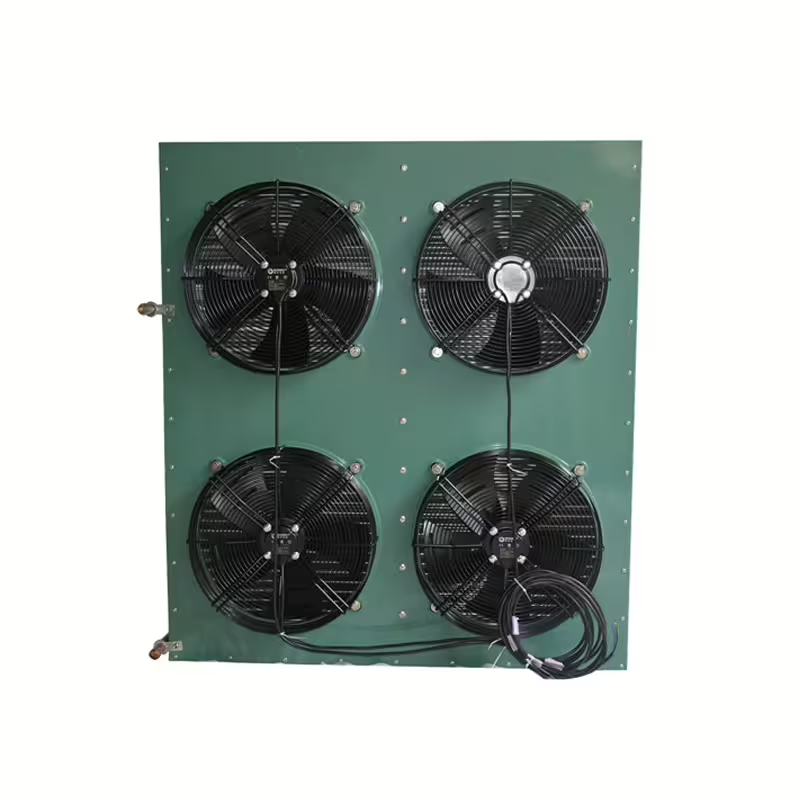
An airtight refrigeration unit is a fully enclosed cooling system designed to prevent any exchange of air or moisture between the internal refrigeration circuit and the external environment. Unlike conventional systems where refrigerant lines, fittings, and components are accessible and potentially vulnerable to leakage, an airtight unit encapsulates the entire refrigeration circuit within a sealed enclosure.
Core Components of Sealed Refrigeration Systems
The airtight design integrates four primary components within a unified sealed structure:
Compressor — The heart of any refrigeration cycle, the compressor circulates refrigerant and raises its pressure. In sealed units, the compressor motor assembly is hermetically enclosed, eliminating shaft seals that could otherwise become leakage points. Brands like Copeland, Bitzer, and Danfoss supply scroll and reciprocating compressors designed specifically for sealed applications.
Condenser — This component releases heat from the high-pressure refrigerant vapor, causing it to condense into liquid. Air-cooled condensers use forced airflow through finned coils, while water-cooled versions rely on water circulation. The condenser is mounted within or connected to the sealed enclosure, with only heat exchange occurring across the boundary.
Evaporator — The evaporator absorbs heat from the space or process being cooled by evaporating liquid refrigerant into vapor. Air handlers or cooling coils distribute the cold throughout the controlled environment.
Sealed Enclosure — The structural housing that contains and protects the refrigeration circuit from dust, moisture, and contamination. Modern enclosures use corrosion-resistant materials like galvanized steel with powder coating or stainless steel for demanding environments.
How Airtight Design Improves System Stability
Traditional refrigeration systems rely on field-installed piping connections that can develop leaks over time due to vibration, thermal cycling, or chemical exposure. Airtight refrigeration units eliminate these vulnerabilities by:
- Reducing potential leak points by approximately 80% compared to field-piped systems
- Isolating the refrigerant circuit from environmental contaminants
- Providing consistent thermal insulation properties
- Enabling factory-controlled assembly and testing procedures
- Supporting more precise pressure management throughout the system lifecycle
How an Airtight Refrigeration Unit Works
Refrigeration Cycle in a Sealed Environment
The vapor-compression refrigeration cycle powers airtight units through four fundamental stages:
- Compression — The compressor draws low-pressure refrigerant vapor and compresses it to high pressure, significantly raising its temperature.
- Condensation — Hot, high-pressure vapor flows to the condenser where ambient air or water absorbs heat, causing the refrigerant to liquefy.
- Expansion — Liquid refrigerant passes through an expansion device (thermal expansion valve or capillary tube), reducing both pressure and temperature.
- Evaporation — Cold, low-pressure refrigerant absorbs heat from the controlled space as it evaporates back into vapor, which returns to the compressor to repeat the cycle.
The sealed environment ensures this cycle operates with minimal refrigerant loss and maximum efficiency, as the system is charged with the exact amount of refrigerant required and protected from external influences.
Heat Absorption and Transfer Process
In an airtight industrial cooling system, the evaporator coil contains cold refrigerant that absorbs heat from air or process fluids circulated across its surface. This heat transfer is governed by fundamental thermodynamics:
- Refrigerant temperature remains constant during phase change (evaporation)
- Heat flows naturally from warmer substances to cooler refrigerant
- The sealed design maintains optimal coil surface temperatures without frost accumulation issues common in poorly sealed systems
Importance of Pressure and Insulation
Airtight construction plays a critical role in maintaining system pressure integrity and thermal performance:
Pressure Management — Sealed systems operate within precise pressure parameters. Any leak, even microscopic, causes refrigerant loss and capacity degradation. The airtight enclosure maintains pressure consistency, ensuring the compressor operates within designed parameters.
Thermal Insulation — The sealed structure includes integrated insulation that prevents condensation on cold surfaces and reduces unwanted heat gains. This insulation remains effective because the enclosure protects it from moisture intrusion and physical damage.
Energy Efficiency — Maintaining stable internal temperatures requires less compressor cycling, reducing energy consumption by 10-25% compared to systems experiencing insulation degradation.
Key Features of an Airtight Refrigeration Unit
Modern sealed refrigeration systems incorporate advanced engineering to deliver reliable performance:
Fully Sealed Refrigeration System Design
Complete hermetic sealing prevents refrigerant leakage, the leading cause of refrigeration system failure. Factory-controlled assembly ensures consistent quality and leak-free operation from day one.
High-Efficiency Compressor Performance
Premium scroll and screw compressors achieve Coefficient of Performance (COP) ratings exceeding 3.0, meaning each unit of electrical energy produces three units of cooling capacity. Variable speed drive (VFD) compressors can modulate capacity from 25% to 100%, matching cooling output to actual demand.
Advanced Insulation Materials
Multi-layer insulation systems using polyurethane foam, VIP (vacuum insulation panels), or aerogel provide thermal conductivity values as low as 0.004 W/(m·K), dramatically reducing heat ingress and defrost requirements.
Low Noise and Vibration Operation
Sound-dampening enclosures reduce operational noise to 55-70 dB(A) for most industrial units. Vibration isolation mounts prevent structure-borne noise transmission, critical for installations near sensitive equipment or occupied spaces.
Smart Temperature Control and Monitoring
Digital control systems with PID algorithms maintain temperature accuracy within ±0.5°C. Real-time monitoring via Modbus, BACnet, or proprietary protocols enables remote supervision and automated alerts for performance deviations.
Corrosion-Resistant and Durable Construction
Stainless steel housings, epoxy-coated coils, and marine-grade finishes extend service life in challenging environments. Units rated for outdoor installation include weatherproof enclosures meeting IP54 or higher protection standards.
Benefits of Using an Airtight Refrigeration Unit

Energy Efficiency and Cost Savings
Airtight refrigeration units deliver significant operational savings:
| Efficiency Metric | Airtight Systems | Traditional Systems |
|---|---|---|
| Average COP | 3.0-4.5 | 2.0-3.0 |
| Annual Energy Consumption | Baseline | +15-30% higher |
| Refrigerant Loss Rate | <0.5%/year | 2-5%/year |
| Maintenance Costs | Low | Moderate to High |
The sealed design eliminates parasitic energy losses from leakage compensation, while high-efficiency components minimize electrical consumption during normal operation.
Improved Temperature Consistency
Stable internal environments protect temperature-sensitive products:
- Pharmaceutical storage: Maintains 2-8°C vaccine cold chain integrity
- Food processing: Prevents hot spots that accelerate spoilage
- Laboratory environments: Ensures experimental repeatability
- Industrial processes: Provides precise thermal conditions for manufacturing
Temperature variability typically stays below ±1°C in properly sealed systems, compared to ±3°C or more in aging conventional equipment.
Reduced Maintenance Requirements
The airtight design fundamentally reduces maintenance burden:
- No annual leak checks required for sealed components
- Compressor operates in clean, controlled environment
- Condenser and evaporator coils remain protected from debris
- Factory-sealed systems typically operate 10-15 years without major service
Extended Equipment Lifespan
By eliminating common failure modes, sealed systems achieve longer operational lifecycles:
- Corrosion damage reduced by environmental isolation
- Compressor wear minimized through consistent operating conditions
- Component aging slowed by reduced thermal cycling
- Typical service life of 15-20 years with proper maintenance
Types of Airtight Refrigeration Units
Industrial Airtight Refrigeration Units
Designed for heavy-duty applications in manufacturing, processing, and large-scale storage facilities. Capacities range from 50 kW to over 1,000 kW with robust construction for continuous operation.
Commercial Airtight Refrigeration Systems
Mid-capacity units serving retail, hospitality, and distribution applications. Typical capacities of 5-50 kW with features optimized for ease of installation and accessibility for routine servicing.
Compact Airtight Refrigeration Units
Small-format sealed systems for point-of-use cooling, laboratory equipment, and specialized applications. Capacities from 0.5-5 kW with plug-and-play installation.
Modular Airtight Refrigeration Systems
Scalable configurations allowing capacity expansion through parallel unit installation. Each module operates as a complete sealed system, providing redundancy and flexible capacity matching.
Air-Cooled vs. Water-Cooled Airtight Refrigeration Units
| Cooling Method | Advantages | Best Applications |
|---|---|---|
| Air-Cooled | Lower installation cost, no water infrastructure, easy maintenance | Dry environments, remote locations, moderate cooling loads |
| Water-Cooled | Higher efficiency, consistent performance in hot climates, quieter operation | High-capacity industrial applications, facilities with cooling towers |
Applications of Airtight Refrigeration Units
Cold Storage Warehouses
Large-scale distribution centers rely on airtight systems for maintaining frozen (-18°C to -25°C) and chilled (0-4°C) product storage. Sealed units provide the reliability demanded by 24/7 operations where temperature excursions can destroy millions in inventory.
Food Processing and Preservation
From meat packing plants requiring 0-4°C processing environments to seafood facilities needing -40°C blast freezing, airtight refrigeration ensures food safety compliance while maximizing product quality and shelf life.
Pharmaceutical and Vaccine Storage
Stringent regulatory requirements demand airtight systems for maintaining vaccine cold chains (2-8°C), blood bank storage (1-6°C), and pharmaceutical ingredient preservation. System validation and documentation support GMP compliance.
Chemical and Laboratory Environments
Corrosive, explosive, or moisture-sensitive chemical storage requires sealed systems that prevent hazardous material release and maintain exact environmental conditions for laboratory research and quality testing.
Logistics and Cold Chain Transportation
Refrigerated containers, reefer vehicles, and intermodal cold chain equipment incorporate sealed refrigeration units that operate reliably during transport while maintaining product integrity from origin to destination.
How to Choose the Right Airtight Refrigeration Unit

Capacity and Cooling Requirements
Correctly sizing the unit prevents both performance issues and wasted energy:
- Calculate total heat load including product mass, ambient gains, infiltration, and equipment heat
- Apply safety factor of 10-15% above calculated peak demand
- Consider future expansion needs when establishing initial capacity
- Match temperature range to specific application requirements
Energy Efficiency Ratings
Evaluate efficiency metrics beyond basic COP:
- SEER (Seasonal Energy Efficiency Ratio): Annualized cooling efficiency
- EER (Energy Efficiency Ratio): Peak load efficiency
- IPLV (Integrated Part Load Value): Performance under typical operating conditions
- HSPF (Heating Seasonal Performance Factor): Heat pump heating efficiency
Higher-rated units command premium pricing but deliver rapid ROI through reduced operating costs.
Environmental Conditions
Installation environment significantly impacts unit selection:
Indoor Installation: Standard units may suffice with adequate ventilation
Outdoor Installation: Units require weatherproofing, UV resistance, and extended temperature operating ranges
Harsh Environments: Corrosion-resistant materials, specialized coatings, and enhanced sealing for coastal, chemical, or high-dust locations
Customization Options from Manufacturers
OEM refrigeration solutions accommodate unique requirements:
- Non-standard voltage configurations (220V, 380V, 440V; 50Hz or 60Hz)
- Special refrigerant options (R-449A, R-452A, R-513A, natural refrigerants)
- Custom control interfaces and communication protocols
- Specialized dimensions for space-constrained installations
- Extended warranties and service agreements
Airtight Refrigeration Unit vs Traditional Refrigeration Systems
| Comparison Factor | Airtight Systems | Traditional Systems |
|---|---|---|
| Initial Cost | 15-25% higher | Baseline |
| Installation Complexity | Simplified, factory-tested | Field piping required |
| Leak Risk | Minimal (hermetic) | Moderate to high |
| Energy Efficiency | Superior (3.0+ COP) | Moderate (2.0-2.8 COP) |
| Maintenance Requirements | Minimal | Regular servicing needed |
| Temperature Stability | Excellent (±0.5°C) | Good (±1-2°C) |
| Field Serviceability | Limited (factory repair) | Full field access |
| 10-Year Operating Cost | Lower total cost of ownership | Higher due to leaks and maintenance |
| Recommended For | Critical applications, harsh environments | Budget-sensitive, accessible locations |
Manufacturing Process of Airtight Refrigeration Units
As an experienced refrigeration equipment manufacturer, we employ rigorous production processes ensuring every sealed unit meets exacting quality standards.
Material Selection and Quality Standards
Our procurement specifications require:
- Compressors: From certified manufacturers (Copeland, Bitzer, Danfoss) with documented performance testing
- Heat Exchangers: Copper-aluminum or stainless steel construction meeting ASTM standards
- Enclosure Materials: Galvanized steel (G90 coating weight minimum) or Type 304 stainless steel
- Refrigerant Tubing: Dehydrated, sealed, and pressure-tested before filling
- Insulation: Closed-cell foam meeting ASTM E84 flame spread requirements
Precision Welding and Sealing Technology
Factory assembly ensures leak-free construction:
- TIG (GTAW) Welding: For stainless steel and critical joints requiring maximum strength
- MIG (GMAW) Welding: For thicker gauge components in structural elements
- Brazing: For copper refrigeration tubing connections with silver-based alloys
- Mechanical Sealing: For service access points using precision-engineered gaskets
- Helium Leak Testing: Every sealed system tested to <1×10⁻⁶ mbar·L/s sensitivity
Testing for Airtight Integrity
Before shipment, each unit undergoes comprehensive testing:
- Pressure Testing: Nitrogen hold at design pressure for 24 hours minimum
- Helium Mass Spectrometer Test: Detects microscopic leaks invisible to other methods
- Vacuum Hold Test: Ensures moisture-free system interior
- Electrical Safety Testing: Hipot, ground continuity, and function verification
- Performance Mapping: Full-load and part-load capacity verification
Performance and Durability Testing
Extended testing validates long-term reliability:
- Burn-in Testing: 72-hour continuous operation under load
- Cycle Testing: Simulates years of start/stop operation
- Environmental Chamber Testing: Validates performance at temperature extremes
- Vibration Testing: Ensures components withstand transport and operation
Quality Control in Mass Production
Statistical process control maintains consistency:
- In-process inspections at critical assembly stages
- Component lot traceability for recall capability
- Final acceptance testing per ISO 9001 procedures
- Third-party certification verification (CE, UL, CSA where applicable)
Maintenance Tips for Airtight Refrigeration Units
Routine Inspection of System Components
Quarterly visual inspections should include:
- Enclosure integrity and weather seals
- Electrical connections and terminal tightness
- Control panel displays and alarm status
- Refrigerant pressure gauges (where accessible)
- Mounting hardware and vibration isolation
Cleaning Condenser and Evaporator Coils
Coil maintenance directly impacts efficiency:
- Quarterly air-side cleaning with soft brush or compressed air
- Annual chemical cleaning for stubborn deposits
- Coil fin straightening if damaged
- Condensate drain line clearance verification
- Air filter replacement per manufacturer schedule
Monitoring Pressure and Temperature Levels
Regular monitoring catches developing issues:
- Record suction and discharge pressures monthly
- Compare readings against baseline performance data
- Track temperature accuracy against setpoint
- Monitor energy consumption for unexplained increases
- Review alarm history for recurring issues
Preventive Maintenance for Long-Term Efficiency
Annual professional service should include:
- Compressor electrical testing and oil analysis
- Expansion device inspection and adjustment
- Refrigerant charge verification
- Control system calibration
- Safety device functional testing
- Documentation update for validation records
Common Problems and Troubleshooting

Reduced Cooling Efficiency
Symptoms: Longer run times, higher than normal discharge pressure
Possible Causes: Dirty condenser coils, low refrigerant charge, non-condensables in system, failing compressor
Resolution: Clean coils, check for leaks, verify refrigerant charge, test compressor performance
Compressor Performance Issues
Symptoms: Unusual noise, excessive vibration, trip on thermal overload
Possible Causes: Electrical issues, refrigerant floodback, overheating, mechanical wear
Resolution: Check electrical supply and connections, verify superheat settings, inspect for restrictions, evaluate compressor condition
Temperature Fluctuations
Symptoms: Setpoint deviation exceeding specifications, inconsistent product temperatures
Possible Causes: Control system issues, sensor failure, improper load matching, door opening frequency
Resolution: Calibrate or replace sensors, verify controller programming, assess load conditions, review operating procedures
How Airtight Systems Minimize Common Failures
The sealed design inherently prevents many traditional failure modes:
- No shaft seal leaks: Hermetic compressor eliminates this failure point entirely
- Protected components: Enclosure shields from dust, moisture, and physical damage
- Factory assembly quality: Controlled environment assembly exceeds field installation
- Consistent operating conditions: Protected internals maintain stable thermal environment
Conclusion
Airtight refrigeration units represent the gold standard for applications demanding reliability, efficiency, and precision temperature control. The sealed design eliminates the primary failure modes plaguing conventional systems while delivering measurable operational advantages in energy consumption, maintenance burden, and equipment longevity.
Whether specifying equipment for a pharmaceutical distribution center, food processing facility, or industrial manufacturing operation, the selection of an airtight system provides the foundation for decades of dependable service. Partnering with experienced manufacturers offering comprehensive support—from custom engineering through installation and ongoing maintenance—ensures optimal system performance throughout the equipment lifecycle.
The investment in quality sealed refrigeration equipment pays dividends through reduced operating costs, improved product outcomes, and peace of mind knowing that critical temperature requirements remain protected regardless of external conditions.
FAQ
Q1: What is the main difference between an airtight refrigeration unit and a conventional system?
A: An airtight refrigeration unit features a fully sealed enclosure that protects all refrigeration components from external contaminants, reducing leak points by approximately 80% compared to field-piped conventional systems.
Q2: How much energy can I save with an airtight refrigeration system?
A: Airtight systems typically achieve 10-25% energy savings compared to traditional refrigeration equipment, with COP ratings of 3.0-4.5 versus 2.0-3.0 for conventional units.
Q3: What industries benefit most from sealed refrigeration units?
A: Cold storage warehouses, food processing facilities, pharmaceutical and vaccine storage, chemical laboratories, and cold chain logistics operations benefit significantly from the reliability and temperature consistency of airtight systems.
Q4: How long does an airtight refrigeration unit typically last?
A: With proper maintenance, sealed refrigeration systems operate 15-20 years, compared to 10-15 years for traditional equipment, thanks to protected components and reduced exposure to environmental factors.
Q5: Do airtight refrigeration units require special maintenance?
A: Maintenance requirements are actually lower than conventional systems. Quarterly visual inspections and annual professional servicing suffice—no regular leak checks are needed for hermetically sealed components.
