

A cold room evaporator is one of the most important parts of a cold storage refrigeration system. Many buyers pay close attention to the compressor or condensing unit, but the evaporator is the component that actually removes heat from the cold room air and delivers cooling to the stored products.
If the cold room evaporator is not selected correctly, the system may still fail even when the compressor capacity looks sufficient. Common problems include uneven temperature, slow pull-down, blocked airflow, excessive frost, product dehydration, high energy consumption, and frequent maintenance.
For cold rooms, freezer rooms, food storage warehouses, supermarket back rooms, agricultural storage, meat processing facilities, seafood storage, and pharmaceutical cold storage, evaporator selection should be treated as a system design decision rather than a simple product purchase.
This guide explains how to choose the right cold room evaporator from a practical buyer’s perspective, with a focus on airflow, capacity matching, defrost design, application temperature, installation layout, and long-term reliability.
Table of Contents
What Is a Cold Room Evaporator?
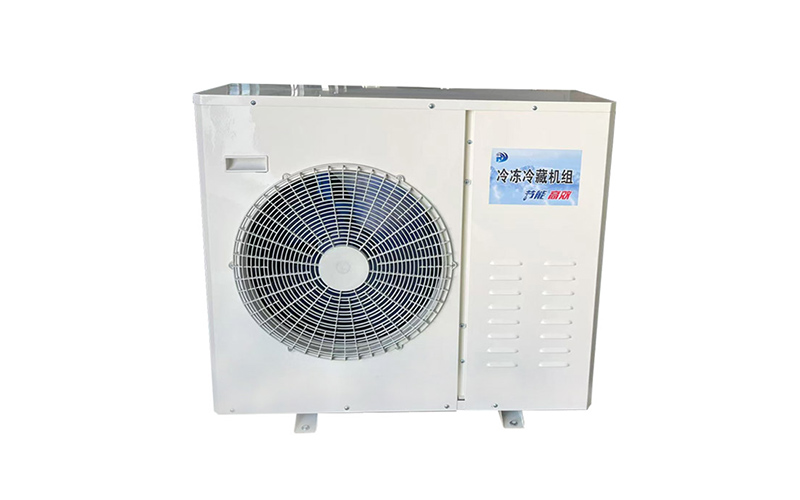
A cold room evaporator is a heat exchanger installed inside a cold room or freezer room. Its job is to absorb heat from the air inside the storage space. Refrigerant flows through the evaporator coil, evaporates at low temperature, and removes heat from the surrounding air. Fans then circulate cooled air across the room.
For a basic technical background, an evaporator is a heat exchanger that supports phase change and heat transfer. In a refrigeration system, this principle is used to absorb heat from the cold room and move it toward the compressor and condenser.
In a complete refrigeration system, the evaporator works together with the compressor, condenser, expansion device, refrigerant piping, and control system. Rongyi Cold provides evaporator air-cooler products for cold storage, factories, and commercial refrigeration environments where rapid cooling, uniform airflow, and stable temperature control are required.
Why the Cold Room Evaporator Is Often the Real Performance Bottleneck
Many cold room problems are blamed on the compressor, but the evaporator is often the hidden reason behind poor performance.
A compressor may provide enough refrigeration capacity, but if the evaporator is too small, poorly installed, blocked by goods, or unsuitable for the room temperature, the cooling effect inside the room will still be weak. The system may run longer than expected, and the room may have hot zones where products do not receive enough cold air.
A poorly selected cold room evaporator can cause:
Uneven room temperature
Slow cooling after loading goods
Ice buildup on the coil
High humidity or excessive drying
Poor airflow around pallets
Higher compressor running time
More frequent defrost cycles
Shorter system service life
A properly selected evaporator helps the refrigeration system transfer heat efficiently from the storage room to the refrigerant circuit. It also improves temperature stability, product protection, and energy performance.
How a Cold Room Evaporator Works With the Full Refrigeration System
A cold room evaporator does not work alone. It is part of the vapor-compression refrigeration cycle.
The compressor pulls low-pressure refrigerant vapor from the evaporator and compresses it. The condenser rejects heat outside the cold room. The expansion device lowers the pressure of liquid refrigerant before it enters the evaporator. Inside the evaporator, refrigerant absorbs heat from the room air and changes into vapor.
The full process depends on proper matching between all components. Rongyi Cold’s compression condensing units combine compressor, condenser, and control components for different refrigeration applications. These units should be matched with the correct evaporator capacity, airflow, and temperature range.
A useful way to understand the evaporator is this: the condensing unit creates the cooling potential, but the evaporator delivers that cooling into the room. If the delivery side is wrong, the whole system becomes inefficient.
Cold Room Evaporator Capacity: Why Bigger Is Not Always Better
Evaporator capacity must match the cold room load and the condensing unit. Some buyers assume that a larger evaporator is always safer, but oversizing and undersizing can both create problems.
An undersized evaporator may not absorb enough heat. This can cause long compressor operation, slow pull-down, unstable room temperature, and product risk.
An oversized evaporator may create poor humidity control, unnecessary installation cost, airflow discomfort, or improper system balance. In some cases, the system may not operate within the intended temperature difference range.
Important capacity factors include:
Cold room size
Target storage temperature
Product type
Daily product loading quantity
Product entry temperature
Required pull-down time
Door opening frequency
Ambient conditions
Condensing unit capacity
Refrigerant type
For food cold rooms, temperature stability is especially important. The U.S. FDA recommends keeping refrigerated food at or below 40°F / 4°C and freezer storage at 0°F / -18°C as general food safety guidance. A cold room evaporator must be selected to support the required storage temperature under real operating conditions, not only under ideal laboratory conditions. You can review the FDA’s guidance on safe food storage temperatures.
Airflow Design Is Just as Important as Cooling Capacity

A cold room evaporator may have enough capacity on paper, but poor airflow can still cause failure. Air must circulate evenly through the room and around the stored products.
In real cold storage projects, airflow is affected by:
Evaporator position
Room length and height
Pallet arrangement
Shelf layout
Goods stacking height
Door location
Aisle direction
Fan air volume
Air throw distance
Return air path
If goods block the air outlet or return air path, the evaporator cannot cool the room effectively. If the evaporator is installed too close to the door, warm air infiltration may cause extra frost and unstable temperature. If the room is long or densely loaded, one evaporator may not be enough to create uniform cooling.
The goal is not simply to “blow cold air.” The goal is to move the right amount of air through the right path, at the right speed, without damaging product quality.
Choosing the Right Fin Spacing for Chiller and Freezer Rooms
Fin spacing is an important cold room evaporator selection factor. It affects heat transfer, airflow resistance, frost tolerance, and cleaning convenience.
For medium-temperature chiller rooms, closer fin spacing may be suitable because frost accumulation is usually less severe. For low-temperature freezer rooms, wider fin spacing is often preferred because frost can build up more easily on the coil.
| Application Type | Typical Storage Use | Evaporator Selection Focus |
|---|---|---|
| Chiller room | Fresh food, dairy, beverages, vegetables | Stable temperature, humidity balance, moderate fin spacing |
| Freezer room | Frozen meat, seafood, frozen meals | Wider fin spacing, strong defrost design, low-temperature performance |
| Processing room | Food preparation, packaging, short-term holding | Fast recovery, hygiene, airflow control |
| Logistics cold room | Frequent loading and picking | Strong airflow, quick pull-down, good door-loss recovery |
| Pharmaceutical storage | Temperature-sensitive products | Stable airflow, accurate control, monitoring support |
Freezer room evaporators must be selected with frost management in mind. If fin spacing is too tight for a humid or low-temperature application, frost may block airflow quickly. Once airflow is reduced, heat exchange efficiency drops, and the system becomes less stable.
Defrost Design: A Critical Detail for Freezer Room Evaporators
Defrost design is one of the most important factors in freezer room evaporator performance. When warm and humid air enters the freezer room, moisture can freeze on the evaporator coil. Over time, frost blocks airflow and reduces heat transfer.
Common defrost methods include electric defrost, hot gas defrost, and air defrost, depending on the application and temperature range.
A poor defrost strategy may cause:
Heavy ice buildup
Reduced airflow
Longer compressor running time
Higher energy consumption
Water leakage after defrost
Ice formation on the floor
Temperature fluctuation during defrost
For low-temperature rooms, the evaporator should be selected with appropriate fin spacing, drain pan design, heater arrangement, and defrost control. The defrost cycle should be long enough to clear frost but not so aggressive that it overheats the room or wastes energy.
ASHRAE lists forced-circulation air coolers, food storage, industrial refrigeration, and commercial refrigeration equipment as part of its refrigeration technical resources. For buyers who want to understand the engineering background behind refrigeration design, the ASHRAE refrigeration resources are a useful industry reference.
Temperature Difference and Humidity Control
Cold room evaporator selection affects humidity. This is especially important for fresh produce, meat, seafood, flowers, and other moisture-sensitive products.
One key concept is temperature difference between the room air and the evaporating temperature. A larger temperature difference can increase cooling intensity but may remove more moisture from the air. A smaller temperature difference may help maintain higher humidity but may require a larger evaporator surface area.
For products that dry easily, aggressive airflow and improper evaporator selection can cause quality loss. For products that release moisture, weak airflow or poor defrost design can cause frost, condensation, and temperature instability.
Different products need different storage conditions:
Vegetables often need careful humidity control.
Meat requires stable low temperature and clean airflow.
Seafood storage must handle moisture and odor control.
Dairy products require temperature consistency.
Pharmaceutical products need controlled and monitored storage.
This is why a cold room evaporator should not be selected only by capacity. It should also be selected based on product characteristics.
Installation Position: Where the Evaporator Should Be Placed
Evaporator placement has a direct impact on cooling performance. Even a well-selected evaporator can perform poorly if installed in the wrong location.
Good installation planning should consider:
Air discharge direction
Return air path
Distance from the door
Distance from walls and ceiling
Drainage route
Maintenance access
Product stacking layout
Worker movement
Forklift operation
Multiple evaporator spacing
In general, the evaporator should be placed where it can circulate air across the room without short cycling air directly back into the return side. It should not blow directly into the door opening, and it should not be blocked by pallets or shelves.
For long rooms, multiple evaporators may provide better temperature distribution than one large unit. For rooms with high product loading, stronger airflow recovery may be needed. For small cold rooms, compact placement and easy maintenance may be more important.
Matching the Cold Room Evaporator With the Condensing Unit
A cold room evaporator must be matched with the condensing unit. If the evaporator and condensing unit are not compatible, the system may suffer from unstable operation, incorrect refrigerant flow, poor superheat control, or weak cooling performance.
Matching should consider:
Cooling capacity
Evaporating temperature
Condensing temperature
Refrigerant type
Expansion device
Pipe length
Height difference
Defrost method
Control system
Application temperature range
Rongyi Cold supplies compressors, condensing units, evaporators, and condensers for refrigeration systems. For a reliable cold room project, these components should be selected as a complete system rather than purchased separately without technical matching.
Common Cold Room Evaporator Selection Mistakes

Many evaporator problems begin during the purchasing stage. Buyers may focus on the lowest quotation, the biggest capacity number, or a familiar model size without checking real application conditions.
Selecting by room volume only
Cold room volume matters, but it is not enough. Product load, door openings, product entry temperature, insulation quality, and operating schedule also affect evaporator selection.
Ignoring airflow path
A unit may have enough capacity but still fail if air cannot circulate around goods. Blocked airflow is one of the most common causes of hot spots.
Using the wrong fin spacing
Freezer rooms need evaporators that can handle frost. If fin spacing is too tight, the coil may block quickly.
Forgetting defrost drainage
Defrost water must drain properly. Poor drainage can cause ice buildup, water leakage, or hygiene problems.
Installing the evaporator too close to the door
Door openings bring warm and humid air into the room. Poor placement can increase frost and temperature fluctuation.
Matching with the wrong condensing unit
Evaporator capacity and condensing unit capacity must work together. Poor matching can affect refrigerant flow and system stability.
Leaving no maintenance space
Technicians need access to fans, coils, drain pans, electrical components, and defrost heaters. Difficult maintenance often leads to poor long-term operation.
How to Choose a Cold Room Evaporator for Different Applications
Different cold storage applications require different evaporator priorities.
For food storage, the main goal is stable temperature, reliable airflow, and product protection. The evaporator should support safe storage conditions and avoid uneven temperature zones.
For freezer rooms, the focus should be low-temperature capacity, fin spacing, defrost performance, and frost resistance.
For fresh produce, humidity control and gentle airflow are important. Excessive airflow may dry products, while poor airflow may create warm areas.
For meat and seafood storage, temperature stability and hygiene are important. The evaporator should be easy to clean and suitable for humid conditions.
For pharmaceutical storage, airflow uniformity, temperature monitoring, and reliable controls are especially important.
For industrial cooling rooms, evaporator selection may depend on process heat load, room layout, operating schedule, and special environmental conditions.
The U.S. Department of Energy discusses walk-in coolers and walk-in freezers as complete systems that include panels, doors, and refrigeration equipment. This is important because evaporator performance depends not only on the unit itself but also on the entire cold room structure and refrigeration system. You can read the DOE’s overview of walk-in coolers and walk-in freezers.
Buyer Checklist Before Ordering a Cold Room Evaporator
Before requesting a quotation, buyers should prepare enough project information. This allows the supplier to recommend a more suitable evaporator and avoid wrong selection.
| Information Needed | Why It Matters |
| Cold room size | Helps estimate cooling load and airflow coverage |
| Target temperature | Determines medium-temperature or low-temperature evaporator selection |
| Product type | Affects humidity, airflow, and cooling speed requirements |
| Daily loading quantity | Influences pull-down demand and capacity selection |
| Product entry temperature | Warm products need more cooling capacity |
| Door opening frequency | Frequent openings increase heat and moisture load |
| Room layout | Affects evaporator position and airflow path |
| Condensing unit model | Ensures system matching |
| Refrigerant type | Must match system design |
| Defrost requirement | Critical for freezer rooms and humid applications |
| Power supply | Important for fans, heaters, and controls |
| Maintenance access | Supports long-term reliability |
For project-based selection, buyers can send these details through Rongyi Cold’s contact page to receive a more practical evaporator recommendation.
Maintenance Tips for Long-Term Evaporator Performance
A cold room evaporator needs regular inspection and cleaning to maintain performance. Even a high-quality evaporator can lose efficiency if the coil is dirty, fans are damaged, or defrost is not working correctly.
Maintenance should include:
Checking fan operation
Cleaning coil surfaces
Inspecting frost buildup
Checking drain pan and drain pipe
Testing defrost function
Inspecting electrical connections
Checking for abnormal vibration or noise
Keeping goods away from air outlet and return air path
Confirming temperature sensor position
Monitoring room temperature trends
Maintenance frequency depends on the application. A clean beverage storage room may need less frequent cleaning than a seafood room, meat processing room, or dusty industrial environment. The more demanding the environment, the more important routine inspection becomes.
When Should You Use Multiple Cold Room Evaporators?
One evaporator is not always the best solution. Multiple evaporators may be better when the room is large, long, irregularly shaped, densely loaded, or has different storage zones.
Multiple evaporators can help:
Improve airflow distribution
Reduce hot spots
Support faster pull-down
Improve redundancy
Reduce air velocity from each unit
Create better temperature balance
However, multiple units must be designed carefully. Poor placement can cause airflow conflict, short cycling, or uneven cooling. The number of evaporators should be based on room size, load distribution, layout, and storage method.
For large cold storage projects, evaporator selection should be reviewed together with the full refrigeration equipment configuration. Rongyi Cold’s product center includes evaporators, condensing units, compressors, condensers, and refrigeration components for different commercial and industrial cooling applications.
How to Evaluate a Cold Room Evaporator Supplier
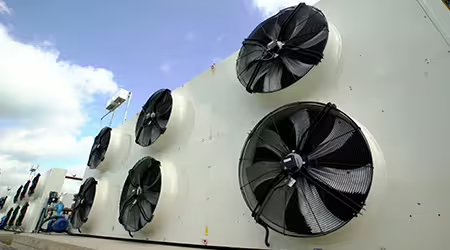
When comparing evaporator suppliers, buyers should not only compare product dimensions or fan quantity. A professional supplier should be able to explain why a specific evaporator is suitable for the project.
Important evaluation points include:
Does the supplier ask about room size and temperature?
Does the supplier ask about product type and loading quantity?
Can the evaporator match the condensing unit?
Is the fin spacing suitable for the application?
Is the defrost design appropriate?
Is airflow coverage considered?
Is the unit easy to install and maintain?
Are customization options available?
Is technical support available before and after purchase?
A good supplier should help buyers reduce system risk, not simply sell a standard unit. This is especially important for overseas buyers, cold room contractors, food processing factories, and industrial refrigeration projects.
Conclusion
A cold room evaporator is not just an indoor cooling coil. It is the component that directly determines how cold air moves, how evenly products are cooled, how much frost forms, how stable the room temperature remains, and how efficiently the refrigeration system operates.
The best evaporator is not always the biggest or the cheapest. It is the one that matches the cold room temperature, product load, airflow requirement, fin spacing, defrost method, condensing unit, and installation layout.
For cold rooms, freezer rooms, food storage facilities, supermarkets, pharmaceutical storage, and industrial refrigeration projects, correct cold room evaporator selection can help prevent hot spots, frost problems, product quality loss, and unnecessary maintenance.
Rongyi Cold provides evaporator air-coolers, compression condensing units, compressors, condensers, and customized refrigeration solutions for commercial and industrial cold storage projects. To select a suitable evaporator for your next project, send your room size, target temperature, product type, and loading details through the contact page.
FAQ
What does a cold room evaporator do?
A cold room evaporator absorbs heat from the air inside the cold room and transfers it to the refrigerant. Fans move air across the coil so the room can maintain the required storage temperature.
How do I choose the right cold room evaporator?
You need to consider room size, target temperature, product type, daily loading quantity, airflow path, fin spacing, defrost method, refrigerant type, and condensing unit capacity.
Why does my evaporator freeze up?
Evaporator freeze-up can be caused by frequent door openings, high humidity, poor defrost settings, wrong fin spacing, blocked airflow, dirty coils, or incorrect system matching.
Can one cold room use multiple evaporators?
Yes. Large, long, irregular, or densely loaded cold rooms may need multiple evaporators to improve airflow distribution and reduce hot spots.
Is the evaporator more important than the compressor?
Both are important. The compressor creates refrigerant circulation, while the evaporator delivers cooling into the room. If either component is poorly selected, the refrigeration system may not perform well.
