

Table of Contents
A filter drier core is the replaceable desiccant and filtration element installed inside a serviceable refrigeration shell. It gives technicians a way to renew drying or cleanup capacity without replacing the entire housing. The benefit is meaningful only when the filter drier core matches the shell, refrigerant, line duty, contamination problem, and required flow.
Selection should begin with the reason for service. A routine moisture-control replacement is not the same job as cleanup after a motor burnout, and a liquid-line duty is not interchangeable with a temporary suction-line cleanup duty. This guide explains how to define that objective, compare performance evidence, replace the filter drier core without introducing new moisture, and decide when follow-up testing is necessary.
First Decide Whether the Shell Should Be Reused
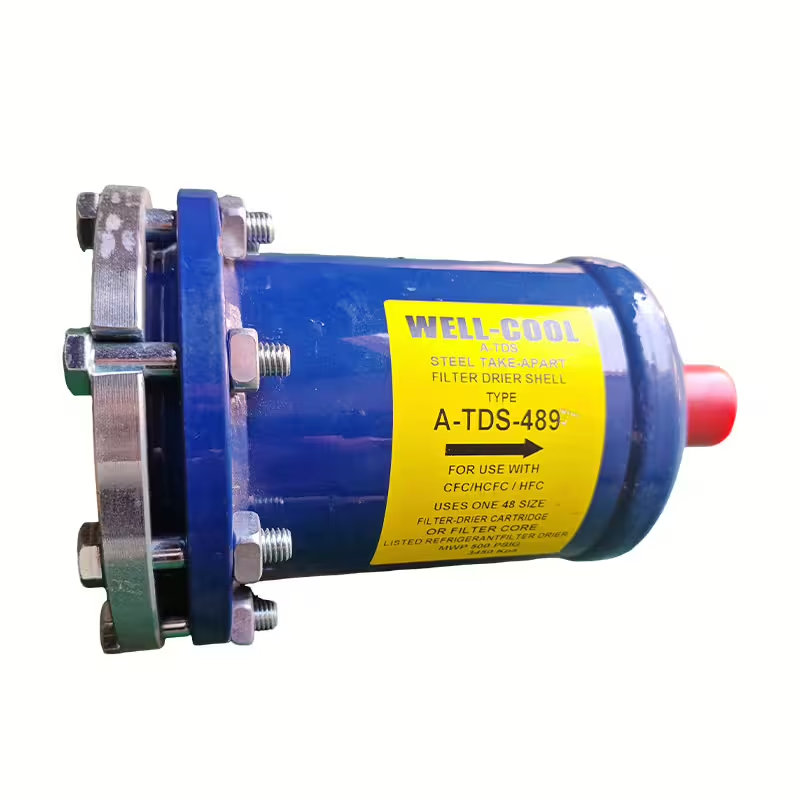
A serviceable shell makes sense where the housing is correctly rated, undamaged, accessible, and designed for the intended filter drier core. Inspect the shell for corrosion, damaged closures, distorted sealing surfaces, suspect threads, or evidence that the pressure boundary has been overheated. A reusable housing is not automatically a reusable housing forever.
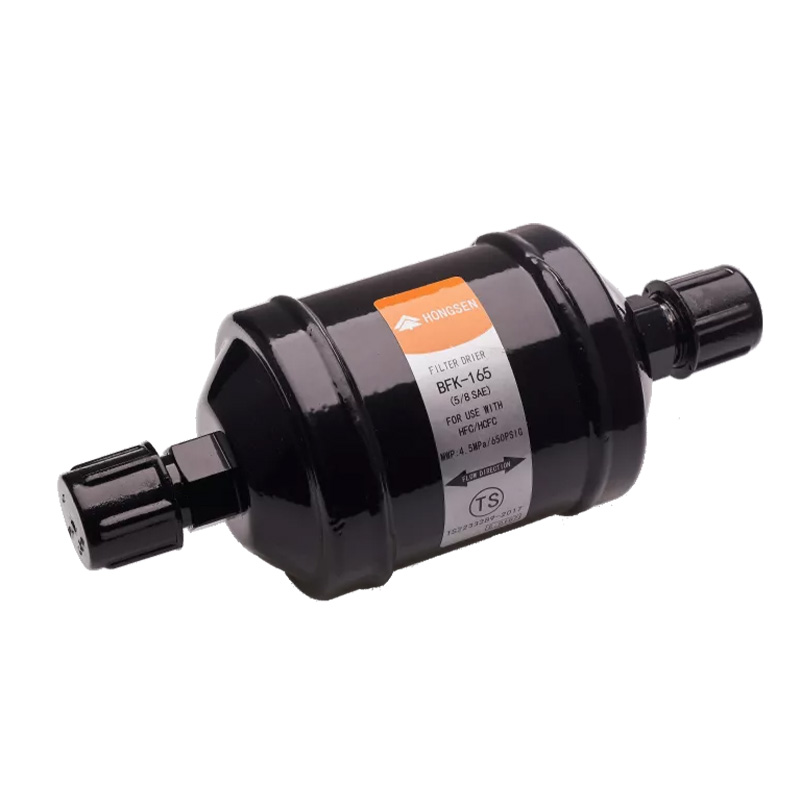
Compare that arrangement with a sealed filter drier. Sealed units simplify replacement on smaller systems, while replaceable-core shells can suit larger systems or planned cleanup work. The refrigeration filter drier guide covers the broader component decision. For a serviceable shell, confirm the exact filter drier core dimensions, retention method, gasket or seal requirements, flow direction, and shell documentation before opening the circuit.
Define the Contaminant You Need to Remove
Moisture, acid, particulate debris, wax, and degraded oil do not create the same selection problem. A filter drier core chosen for normal liquid-line drying may not be the correct element for cleanup after an electrical motor failure. Conversely, a cleanup-oriented element should not be installed indefinitely merely because it appears more aggressive.
Use evidence. Review why the system was opened, whether the compressor failed electrically or mechanically, the condition of recovered oil, acid-test results when appropriate, and any history of water entry. EPA guidance on managing refrigeration and air-conditioning equipment provides regulatory context for refrigerant service. The filter drier core decision still depends on the actual circuit condition and the equipment instructions.
Read Capacity Ratings as Separate Measures
Three ideas are often mixed together: water capacity, refrigerant flow capacity, and particle filtration. They describe different functions. Water capacity indicates how much moisture a filter drier core can hold under stated test conditions. Flow capacity relates to refrigerant movement and allowable pressure drop. Filtration describes retention of solid contamination. One large number cannot stand in for all three.
The AHRI 710/711 standard addresses performance rating of liquid-line driers, including water capacity and refrigerant flow capacity. Compare ratings only when the refrigerant, temperature, pressure-drop criterion, and test basis are comparable. A filter drier core selected from a shell connection size alone can be undersized for moisture duty or create excessive restriction even though it physically fits.
Separate Liquid-Line Duty From Suction Cleanup
In a liquid line, the filter drier core must provide drying and filtration while maintaining reliable liquid flow to the expansion device. A rising pressure drop can cause flash gas and unstable feeding. The refrigeration sight glass guide explains why bubbles should not be interpreted as charge evidence until restrictions and operating conditions have been considered.
A suction-line filter drier core used for cleanup sees vapor flow, oil return, and a different acceptable pressure-loss problem. Excess suction restriction directly reduces compressor inlet pressure and capacity. Use only a shell and core approved for that duty, monitor pressure drop, and remove or replace the cleanup arrangement according to evidence and manufacturer guidance. Do not improvise by moving any available filter drier core from one line to another.
Use Shell Size and Core Count Correctly
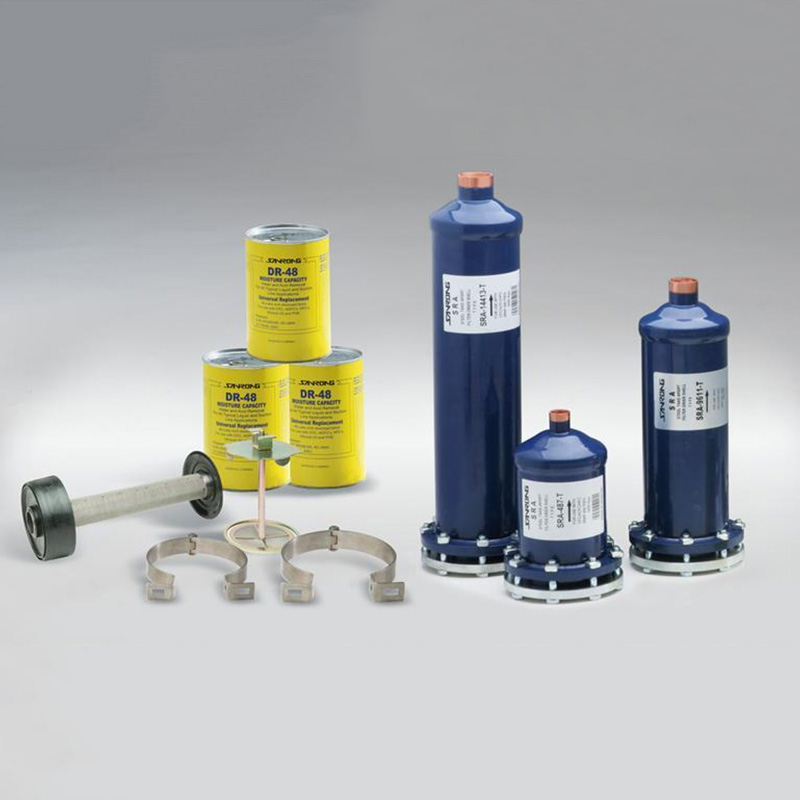
A housing that accepts one, two, three, or four elements changes total filter drier core capacity and flow area, but core count is not a substitute for calculation. Connection diameter describes the piping interface; it does not prove the assembly can carry the design mass flow at an acceptable pressure drop. Larger connections can still serve an application with demanding cleanup capacity, and multiple cores still require correct refrigerant and duty ratings.
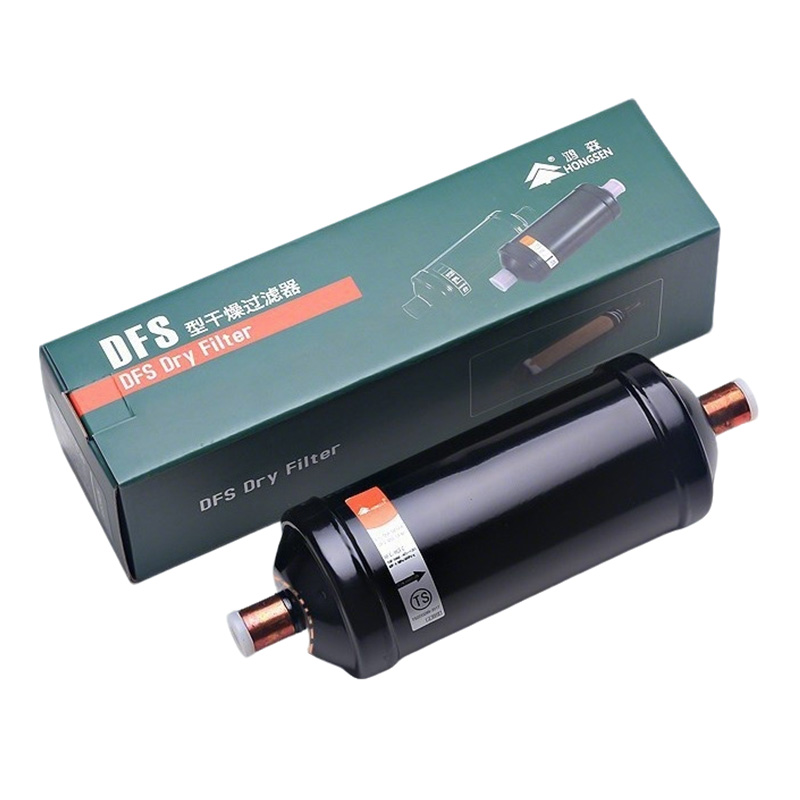
For the available DFS replaceable-core filter drier range, the shell family includes one- through four-core configurations and ODF connection options. Verify the exact model’s compatibility, maximum working pressure, temperature range, and line application. Then size the filter drier core assembly with design mass flow and the published rating method, using refrigerant properties from a reliable source such as NIST REFPROP where engineering calculation is required.
| Service objective | Evidence to review | Selection emphasis | Follow-up |
|---|---|---|---|
| Routine moisture control | Opening history, moisture indicator, evacuation record | Water capacity plus normal flow capacity | Establish a clean pressure-drop baseline |
| Particulate protection after repair | Debris source and repaired component | Filtration with acceptable line loss | Inspect trend after stable operation |
| Motor burnout cleanup | Failure mode, oil condition, acid evidence | Approved cleanup core and sufficient contaminant capacity | Repeat testing based on results |
| Suspected liquid-line restriction | Inlet/outlet pressure or temperature evidence | Correct cause; do not merely install a larger element | Verify stable liquid feed |
| Temporary suction cleanup | Suction pressure drop and compressor limits | Approved vapor-duty shell and core | Plan removal or replacement criteria |
Establish a Pressure-Drop Baseline
Pressure drop is more useful as a trend than as an isolated touch test. After a new filter drier core is installed and the system reaches stable operation, record upstream and downstream pressure or an appropriate temperature-based indication at a documented load. Future readings can then be compared under similar conditions.
A change can indicate contaminant loading, moisture freezing, damaged internal parts, or another restriction. It can also reflect a different mass flow, so do not condemn the filter drier core from one measurement taken at an unrelated load. On the liquid line, evaluate whether the pressure loss approaches the point where liquid flashes. On suction cleanup, stay within the compressor manufacturer’s permitted inlet pressure loss.
Keep the New Core Dry During Replacement
Desiccant begins adsorbing moisture as soon as its sealed package is opened. Prepare tools, seals, and the work area before exposing the filter drier core. Recover refrigerant correctly, isolate energy, confirm zero pressure, and open the shell according to its instructions. The OSHA hazardous-energy standard is a useful safety reference; refrigeration work must also meet local requirements and be performed by qualified personnel.
- Confirm the replacement element and all shell seals before shutdown.
- Recover refrigerant and prove the isolated section is depressurized.
- Open the housing cleanly and prevent dirt from entering the piping.
- Remove the spent element and inspect its seating parts and shell interior.
- Open the new filter drier core package only when immediate installation is possible.
- Fit new specified seals, close the shell, pressure-test, evacuate, and leak-check.
Do not leave a filter drier core on a bench while other repairs continue. Avoid touching the active material, and never reuse an exposed or spent element. Handle recovered refrigerant following applicable rules; EPA provides a service overview for refrigerant recovery, recycling, and reclaiming.
Make Burnout Cleanup Evidence Driven
After a motor burnout, remove the failed component and contaminated oil according to the equipment procedure, then choose a filter drier core specifically approved for the cleanup duty. The aim is to capture acid and debris without creating an unmanaged restriction. There is no credible universal rule that every cleanup core must be changed after the same number of hours.
Instead, define change criteria before startup: acid-test result, oil condition, filter drier core pressure-drop trend, moisture indication, and compressor operating evidence. A heavily contaminated circuit may require more than one replacement. Continue until the evidence meets the service target, not until an arbitrary timer expires. The compressor must also be protected from the root cause described in the compressor selection and operation guide.
Close the Job With Records, Not Assumptions
Record the shell model, filter drier core type and quantity, line location, reason for replacement, seals changed, pressure-test result, evacuation endpoint, refrigerant handling, initial pressure drop, and any acid or oil observation. These details let the next technician distinguish normal aging from a recurring contamination problem.
If the required core or shell duty is uncertain, use the Rongyi Cold contact page and provide refrigerant, line position, design capacity, operating temperatures, connection size, shell model, failure history, and service objective. A defensible filter drier core recommendation needs those inputs, not just a photograph of the cartridge.
Frequently Asked Questions
Can any core that fits the shell be used?
No. Physical fit does not establish refrigerant compatibility, pressure rating, water capacity, flow capacity, filtration duty, or cleanup suitability. Match the filter drier core to the documented shell and application.
When should a replaceable core be changed?
Change criteria can include service opening, moisture or acid evidence, contamination history, and a rising pressure-drop trend. The correct trigger for a filter drier core depends on the system and service objective.
Is a larger shell connection always better?
No. Connection size must match the piping, but the filter drier core assembly still needs adequate rated flow and contaminant capacity at the design condition.
Should a core be left open before installation?
No. Keep the filter drier core sealed until the shell is ready because exposed desiccant adsorbs ambient moisture and loses useful capacity.
Does every compressor burnout require the same cleanup schedule?
No. Select an approved filter drier core and set replacement or removal decisions from acid, oil, moisture, and pressure-drop evidence plus the equipment instructions.
