

Table of Contents
Evaporator icing is abnormal ice accumulation that blocks airflow, covers the wrong part of a coil, bridges into the drain pan, or returns quickly after defrost. The shape and location of evaporator icing are evidence. A uniform frost layer, a solid white block, clear ice from water refreezing, and a small frosted inlet section do not point to the same cause.
The best diagnosis starts before thawing destroys the pattern. Photograph the coil, verify airflow and moisture entry, review the complete defrost sequence, examine drainage, and only then evaluate refrigerant feed. This fault-tree approach prevents evaporator icing from being treated automatically as a low-charge problem or a need for longer defrost.
Preserve the Ice Pattern Before It Changes
Photograph the air-entering face, fan side, distributor, bends, headers, suction line, pan, and drain. Note whether evaporator icing is soft frost, hard white ice, or clear refrozen water. Record the boundary between iced and clean fins and whether every refrigerant circuit behaves alike.
Also record room temperature, setpoint, door activity, product loading, fan state, time since defrost, and controller alarms. Do not chip ice from tubes or bend fins. If immediate thawing is needed for safety, keep the images and observations. The air-cooled evaporator page helps identify component layout for the report.

Use the Pattern to Choose the First Branch
A coil uniformly buried in frost often suggests insufficient or failed defrost, high moisture infiltration, or low airflow. Evaporator icing concentrated at the refrigerant inlet may accompany starvation, but it can also reflect circuiting and load. Clear ice near the pan or lower coil often indicates meltwater that did not drain. Ice around one fan can follow a stopped motor or local airflow obstruction.
Patterns guide tests; they do not prove causes. Build a hypothesis and state what measurement could disprove it. A fault tree keeps evaporator icing work efficient because the technician checks the strongest branch first while preserving alternatives.
Prove Air Is Moving Through the Whole Coil
Check that every fan is commanded on outside defrost and delay, rotates correctly, draws appropriate current, and has intact blades and guards. Inspect product stacking, ceiling clearance, return-air blockage, loose panels, dirty fins, and ice that may itself restrict flow. Evaporator icing can become self-reinforcing as lower airflow makes the coil colder and catches more moisture.
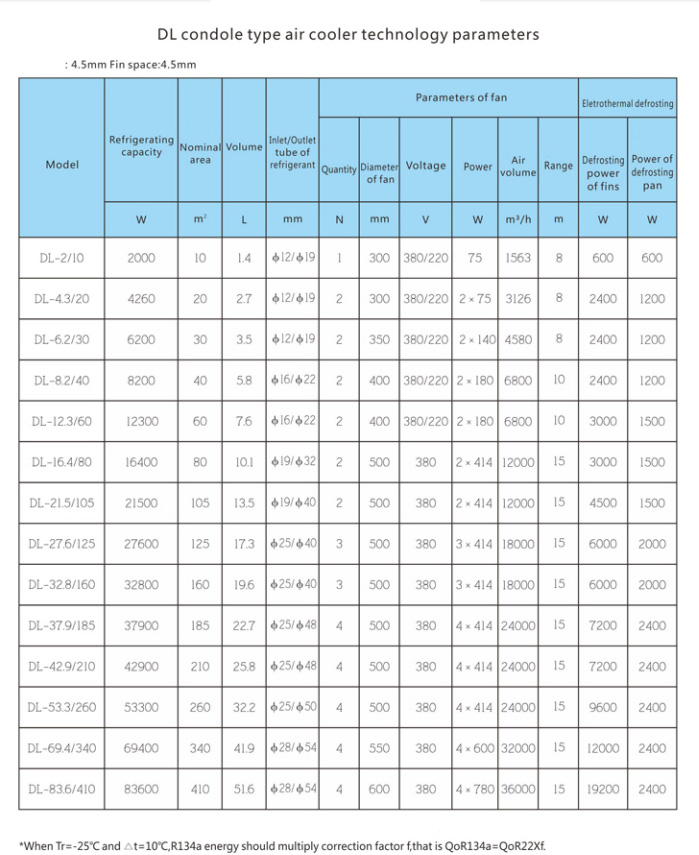
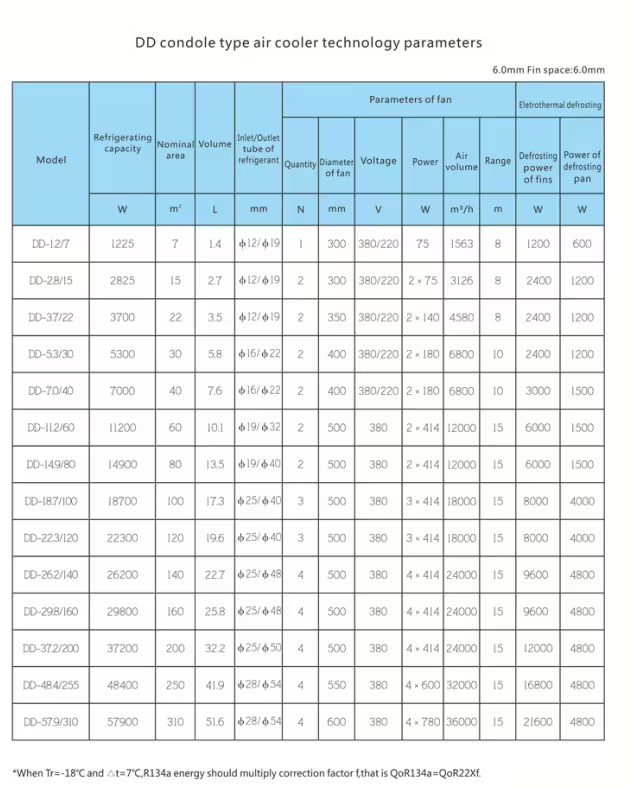
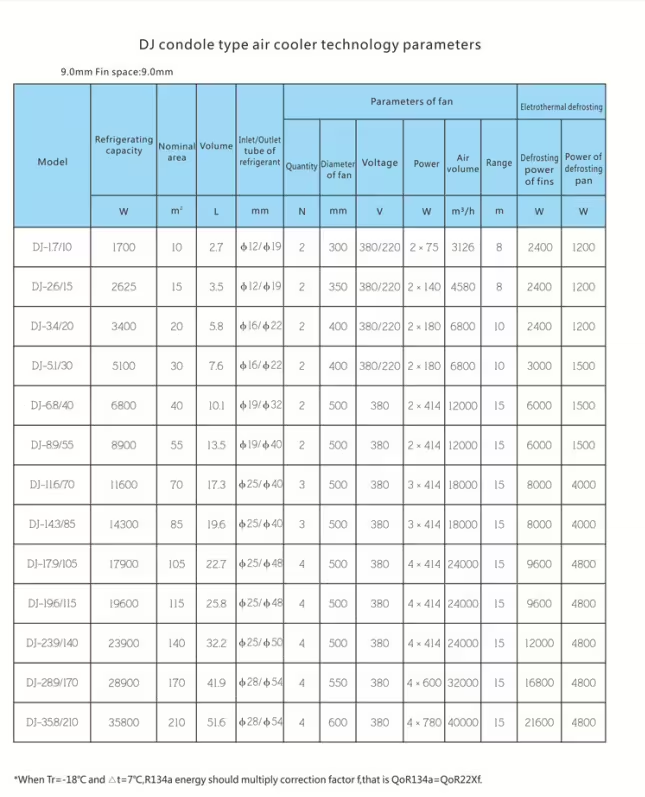
Compare entering and leaving air temperatures at several positions, not one spot. Look for short-circuiting discharge air that returns directly to the coil. The cold-room evaporator guide explains airflow and fin-spacing considerations. Restore airflow before judging refrigerant feed from pressure alone.
Find the Moisture Source Feeding the Ice
Open doors, damaged gaskets, pressure imbalance, unsealed penetrations, wet product, frequent washdown, and blocked vestibule controls can add moisture faster than the system was designed to remove. Observe operations during busy periods. A closed-door inspection can miss the condition that creates evaporator icing.
Check whether warm humid air enters through the drain because a trap is missing or dry. Inspect insulation and vapor barriers for gaps that allow condensation near the coil. Correcting infiltration may reduce evaporator icing more effectively than adding defrost cycles, which also add heat to the room.
Audit Defrost From Initiation Through Fan Restart
Confirm initiation occurs, liquid feed or cooling is isolated, heaters or hot gas actually deliver heat, termination represents the last-ice area, maximum time is not the normal endpoint, meltwater drains, drip time completes, and fans delay until the coil is cold. Failure at any stage can leave evaporator icing that worsens after restart.
Review trends rather than controller settings alone. A displayed output does not prove a contactor, valve, or heater operated. Use the cold room defrost cycle guide for timing logic and the hot gas defrost guide where refrigerant gas supplies heat.
| Ice pattern | First checks | Evidence that changes direction |
|---|---|---|
| Whole coil is a frost block | Fans, moisture entry, defrost heat and termination | Normal airflow plus incomplete heat points toward defrost |
| Only inlet circuits frost | Feed, restriction, load, distributor | Low superheat or airflow fault rejects simple starvation |
| Clear ice rises from pan | Drain slope, heat, trap, outlet, drip time | Free drainage shifts focus to water source |
| One fan section ices | Motor command, rotation, blade, obstruction | Normal local airflow shifts focus to circuiting |
| Ice returns directly after restart | Residual water, early fans, incomplete termination | Dry coil after defrost shifts focus to infiltration/feed |
Evaluate Refrigerant Feed With Pressure and Temperature
After airflow and defrost evidence are credible, measure pressure and line temperature at meaningful locations and calculate superheat using the correct refrigerant data. Check subcooling, sight-glass condition, filter-drier pressure drop, valve sensing, distributor behavior, and load. The pressure gauge reading guide explains why one pressure is not a diagnosis.
Use NIST REFPROP for refrigerant property calculations where appropriate. A starved coil may show evaporator icing near the inlet, but low load or airflow can produce different superheat behavior. The expansion valve selection guide provides context. Do not add refrigerant solely because a section of the evaporator is white.
Check Sensors Where They Are Physically Mounted
A room sensor in a supply jet can short-cycle cooling; a loose defrost sensor can end heat early; a fan-delay sensor warmed by a heater can restart airflow at the wrong time. Inspect contact, insulation, wiring, calibration, controller scaling, and placement. Compare the displayed value with an independent instrument.
Move a sensor only according to documented design logic. Changing location may solve one symptom while creating another. For evaporator icing, photograph each sensor location and state what physical condition it is intended to represent.
Thaw Safely and Inspect the Revealed Surfaces
Control electrical and mechanical energy before working around fans and heaters; refer to the OSHA lockout/tagout standard. Use an approved thawing method that will not damage tubes, fins, wiring, drain pans, or insulation. Never strike ice from refrigerant tubing.
As evaporator icing melts, inspect for crushed fins, oil staining, heater damage, displaced sensors, loose panels, drain debris, and water paths. Refrigerant handling must follow qualified practice and applicable EPA Section 608 guidance. The thaw is an inspection opportunity, not the repair by itself. Established refrigeration fundamentals can be checked in the ASHRAE Handbook.
Prove the Repair Through One Complete Cycle
Observe cooling pull-down, stable operation, frost formation, defrost initiation, heat distribution, termination, drainage, drip, fan delay, and restart. Record the same photographs and measurements used in diagnosis. Evaporator icing is not resolved merely because the coil is clean immediately after thawing.
For support, submit photographs before and after defrost, room conditions, controller trend, fan readings, pressure-temperature data, and evaporator model through the contact page. A complete evaporator icing evidence set makes the root cause review far more reliable.
Frequently Asked Questions
Does an iced coil always mean low refrigerant?
No. Airflow, defrost, drainage, sensors, and infiltration are common branches. Diagnose evaporator icing before changing charge.
Why should the ice be photographed?
Location, texture, and boundaries help separate water refreezing, airflow loss, failed defrost, and feed-related evaporator icing.
Can longer defrost solve every ice problem?
No. Longer heating can warm the room without correcting drainage, infiltration, fan failure, or refrigerant-feed causes of evaporator icing.
When should superheat be checked?
After airflow and operating state are verified, use pressure and temperature together to assess whether evaporator icing relates to refrigerant feed.
How is a repair confirmed?
Run and document cooling, frost formation, defrost, drainage, and restart. Evaporator icing must not return under representative conditions.
