

Selecting a condensing unit and an evaporator with the same nominal cooling capacity does not automatically create a well-balanced refrigeration system. Their published capacities may be based on different evaporating temperatures, condensing temperatures, temperature differences, refrigerants, airflow conditions, or defrost assumptions.
Effective condensing unit evaporator matching requires buyers and refrigeration contractors to compare both components at the same operating point. The objective is not simply to find two products with similar capacity figures. The objective is to build a system in which the evaporator absorbs the cold room heat load at approximately the same rate that the condensing unit can remove it.
This guide explains how to evaluate capacity, temperature difference, airflow, fin spacing, defrost, refrigerant control, piping, and operating conditions before ordering a matched cold room refrigeration system.
Table of Contents
Why Condensing Unit Evaporator Matching Matters

A cold room refrigeration system works as a connected circuit. The evaporator absorbs heat inside the refrigerated space, while the condensing unit compresses the refrigerant and rejects the absorbed heat to the surrounding environment.
When the two sides are poorly matched, adjusting the thermostat or adding refrigerant usually does not solve the underlying problem.
When the Evaporator Is Too Small
An undersized evaporator has insufficient coil surface, airflow, or refrigerant-side capacity to absorb the required room heat load. The compressor may continue operating while the room temperature falls slowly or remains above the setpoint.
Possible symptoms include:
- Long compressor operating periods
- Low suction pressure
- Excessive frost concentration
- Uneven room temperature
- Poor pull-down performance
- High product temperature after loading
- Reduced airflow through the evaporator
When the Evaporator Is Too Large
A larger evaporator is not automatically harmful, but it must be selected and controlled correctly. An oversized coil operating with an unsuitable expansion device may create unstable superheat, refrigerant distribution problems, or excessively high suction conditions during heavy loading.
The evaporator fan capacity may also be unnecessarily high for the stored product, increasing product dehydration or creating uncomfortable working conditions in processing rooms.
When the Condensing Unit Is Too Small
An undersized condensing unit cannot remove heat at the rate required by the cold room. The system may operate continuously, especially during product loading, hot weather, frequent door openings, or pull-down periods.
When the Condensing Unit Is Too Large
An oversized condensing unit may satisfy the thermostat quickly under light load and then stop before the system reaches stable operating conditions. Frequent starting and stopping can increase electrical and mechanical stress while reducing temperature stability.
Correct condensing unit evaporator matching therefore seeks a practical operating balance rather than simply selecting the largest available components.
Start With the Real Cold Room Heat Load
The first step is not opening a product catalog. It is calculating how much heat must be removed from the cold room during the design period.
A cold room heat load normally includes:
- Heat transferred through insulated walls, ceiling, floor, and doors
- Warm air entering when doors open
- Heat introduced by newly loaded products
- Heat released by people, lighting, fans, motors, and equipment
- Heat from evaporator defrost
- Heat of respiration from fresh produce
- Solar and ambient exposure where applicable
- Pull-down requirements after loading or shutdown
The FAO cold store refrigeration load guide illustrates why transmission, infiltration, products, occupants, fans, lighting, and defrost must be considered separately. ASHRAE also divides refrigerated-facility loads into transmission, product, internal, infiltration, and equipment-related loads.
For a broader starting point, buyers can review Rongyi Cold’s cold room refrigeration unit sizing guide.
Transmission Load
Transmission load is heat entering through the building envelope.
A simplified calculation is:
Q = U × A × ΔT
Where:
- Q is the heat transfer rate
- U is the overall heat-transfer coefficient
- A is the surface area
- ΔT is the temperature difference between the room and its surroundings
This calculation must be completed separately for walls, ceilings, floors, doors, and other surfaces when their insulation values or exposure conditions differ.
Infiltration Load
Every door opening allows warm and often humid air to enter the room. That air must be cooled, and moisture may freeze on the evaporator coil.
Infiltration depends on:
- Door dimensions
- Opening frequency
- Opening duration
- Indoor and outdoor temperatures
- Relative humidity
- Strip curtains or air curtains
- Traffic volume
- Pressure differences
- Loading procedures
A storage room opened twice per day does not have the same requirement as a distribution room with continuous forklift traffic. Industry guidance notes that infiltration can vary greatly according to the number of openings, traffic, humidity, and protection at the doorway.
Product Load
Product load is often underestimated because buyers focus only on room dimensions.
The required cooling capacity depends on:
- Product weight loaded per day
- Product entering temperature
- Final storage temperature
- Required cooling time
- Product-specific heat
- Latent heat when freezing is required
- Packaging and pallet arrangement
- Heat of respiration for fresh produce
A cold room storing already-frozen goods requires a different refrigeration system from a room that receives warm meat, seafood, vegetables, beverages, or processed food every day.
Compare Both Capacities at the Same Design Conditions
The most important rule in condensing unit evaporator matching is simple:
Never compare two capacity figures unless they are rated under compatible operating conditions.
A condensing unit may be rated at one evaporating temperature and outdoor condition, while an evaporator may be rated at a different room-to-refrigerant temperature difference. Although both labels show the same nominal capacity, their real capacities may be significantly different in the project.
Information Required From the Condensing Unit
Before selecting a unit from the refrigeration condensing unit range, request capacity data showing:
- Refrigerant
- Evaporating temperature
- Condensing temperature
- Suction gas condition
- Liquid subcooling assumption
- Outdoor or entering-air temperature
- Compressor operating envelope
- Fan configuration
- Electrical supply
- Capacity control method
Information Required From the Evaporator
For an air-cooled evaporator, request:
- Refrigerant
- Evaporating temperature
- Entering-air temperature
- Temperature difference
- Coil capacity
- Air volume
- External static pressure, where relevant
- Air throw
- Fin spacing
- Fan power
- Defrost method
- Drain-pan arrangement
A Practical Capacity Comparison
Assume a condensing unit is listed as having a nominal capacity of 10 kW. The number is useful only when you know the conditions at which that capacity was measured.
An evaporator may also be listed as 10 kW, but its rating may be based on a larger temperature difference than the project permits. If the cold room requires higher humidity and a smaller temperature difference, the evaporator’s available capacity may fall below its nominal rating.
The correct comparison is therefore:
| Matching Item | Condensing Unit | Evaporator | Must Align? |
|---|---|---|---|
| Refrigerant | Specified refrigerant | Same refrigerant | Yes |
| Evaporating temperature | Selection condition | Coil selection condition | Yes |
| Room temperature | Indirect input | Direct input | Yes |
| Temperature difference | Affects suction condition | Affects coil output | Yes |
| Design capacity | At project conditions | At project conditions | Yes |
| Operating hours | Affects required capacity | Affects recovery | Yes |
| Ambient temperature | Affects condenser output | Usually indirect | Must be considered |
| Defrost allowance | Affects running time | Affects available cooling time | Yes |
Understand Evaporator TD Before Selecting a Coil
Evaporator TD is the difference between the air entering the evaporator and the refrigerant evaporating temperature.
For example, if room air enters the evaporator at 0°C and the refrigerant evaporates at -8°C, the evaporator TD is approximately 8 K.
This value affects:
- Evaporator capacity
- Coil surface temperature
- Room humidity
- Product moisture loss
- Frost formation
- Compressor capacity
- Suction pressure
- Overall system efficiency
A Larger TD
A larger TD can increase the evaporator’s apparent cooling capacity for a given coil size. However, the colder coil may remove more moisture from the air and increase product dehydration.
A large TD may be acceptable for some packaged or frozen products but less desirable for unpackaged fresh produce, meat, flowers, or other moisture-sensitive products.
A Smaller TD
A smaller TD generally requires a larger heat-transfer surface to provide the same cooling capacity. It can support higher room humidity and reduce product moisture loss, but it must be included in the original condensing unit evaporator matching calculation.
Changing TD changes the operating point of the entire refrigeration system. It is not only an evaporator-selection detail.
Match Airflow to the Room, Not Just the Coil Capacity
An evaporator can have enough nominal capacity and still fail to maintain uniform room temperature if its airflow is unsuitable.
Airflow selection should consider:
- Room length and width
- Ceiling height
- Rack and pallet arrangement
- Product stacking density
- Required air throw
- Return-air path
- Number of evaporators
- Fan speed
- Product sensitivity
- Door location
Air Volume
Air volume describes how much air passes through the evaporator during a given period. Insufficient air volume reduces heat transfer and can create warm zones.
Excessive airflow may increase fan heat, noise, and moisture loss from unpackaged products.
Air Throw
Air throw describes how far the discharge air can travel effectively.
A long room may require a different evaporator configuration from a compact square room, even when both rooms have the same refrigeration load. Racks and pallets can interrupt the air path, so theoretical air throw must be evaluated against the actual room layout.
Return-Air Clearance
The evaporator needs an unobstructed path for warm room air to return to the coil. Stacking products directly in front of the fan discharge or against the return side can sharply reduce practical performance.
The walk-in cold room technical guide published by the UK government emphasizes that cold-room specification should consider design, component selection, operation, energy efficiency, and product requirements as one complete process.
Select Fin Spacing for the Temperature and Moisture Load
Fin spacing is a critical part of condensing unit evaporator matching, especially for freezer rooms.
Moisture from products, door infiltration, workers, washing, and surrounding air can freeze on the evaporator surface. If the fin spacing is too narrow for the application, frost can bridge the spaces between fins, block airflow, and reduce heat-transfer capacity.
Medium-Temperature Storage
Cooler rooms operating above freezing may use closer fin spacing because frost accumulation is usually less severe. However, high-humidity rooms and frequent door openings can still create condensation and icing concerns.
Low-Temperature Freezer Rooms
Freezer-room evaporators normally require wider fin spacing and an effective defrost system. Buyers should evaluate not only the initial clean-coil capacity but also how the coil performs between defrost cycles.
Very Low-Temperature Applications
Very low-temperature applications may require wider fin spacing, longer defrost recovery periods, special fan arrangements, and more careful compressor operating-envelope checks.
A practical selection should confirm:
- Expected frost accumulation
- Time between defrost cycles
- Defrost duration
- Drainage conditions
- Fan delay after defrost
- Available refrigeration recovery time
Include Defrost in Condensing Unit Evaporator Matching
Defrost temporarily adds heat to the refrigerated space and interrupts useful cooling. It therefore affects both the evaporator selection and the condensing unit operating schedule.
Electric Defrost
Electric heaters warm the coil and drain pan to remove frost. The system is relatively straightforward, but heater energy must be removed after defrost ends.
Important checks include:
- Heater capacity
- Defrost duration
- Defrost frequency
- Fan delay
- Drain heater
- Termination sensor position
- Drip time
Off-Cycle Defrost
Off-cycle defrost stops refrigeration and allows room air to warm the coil. It is generally more suitable for applications operating above freezing where the surrounding air can melt the frost.
It is usually not sufficient for low-temperature freezer rooms.
Hot-Gas Defrost
Hot-gas defrost can remove frost quickly but requires a more complex piping and control arrangement. Valves, drainage, pressure control, and refrigerant management must be designed as part of the complete system.
Why Defrost Changes Capacity Selection
Suppose the calculated heat load assumes that the system can provide cooling for 24 hours each day. In reality, the evaporator may spend part of the day in defrost, fan delay, temperature recovery, or maintenance.
The available operating hours are therefore lower than the total calendar hours. The required running capacity must be adjusted accordingly.
This is one reason why condensing unit evaporator matching should include the operating schedule rather than only the instantaneous heat load.
Match the Refrigerant and Expansion Device
The refrigerant must be selected before the final component combination is approved.
Refrigerant selection affects:
- Compressor displacement and operating envelope
- Condensing-unit capacity
- Evaporator capacity
- Expansion-valve selection
- Pipe size
- Working pressure
- Safety requirements
- Oil compatibility
- Control settings
- Regulatory compliance
The U.S. Environmental Protection Agency classifies remote condensing units as a distinct commercial refrigeration equipment category and maintains current information about acceptable refrigerant substitutes and sector restrictions. Buyers should confirm applicable local regulations before finalizing a system.
Relevant resources include:
- EPA retail food refrigeration guidance
- EPA refrigeration and air-conditioning substitutes
- EPA HFC restrictions by sector
Expansion-Valve Capacity
The expansion valve regulates refrigerant flow into the evaporator. It must be selected according to:
- Refrigerant
- Evaporator capacity
- Evaporating temperature
- Condensing pressure
- Liquid temperature
- Pressure drop
- Distributor pressure loss
- Internal or external equalization
- Required superheat control
A valve selected only by pipe connection size may be too small, too large, or unsuitable for the operating range.
Rongyi Cold’s TF/TFW thermostatic expansion valves can be evaluated alongside the evaporator and condensing unit rather than treated as an unrelated accessory.
Solenoid Valve
A liquid-line solenoid valve may be used for temperature control, pump-down control, or refrigerant-flow isolation. Its flow direction, capacity, pressure differential, coil voltage, and refrigerant compatibility must match the system.
See the available Type 10 solenoid valve configurations for refrigeration applications.
Filter Drier
Moisture and solid contamination can restrict refrigerant flow and damage valves or compressors. A correctly selected bi-directional filter drier helps protect the liquid line, but its connection and flow capacity must suit the system.
Check Ambient Temperature at the Condensing Unit

A condensing unit does not provide one fixed capacity under every condition. Its output changes with evaporating and condensing conditions.
High outdoor temperatures can reduce available refrigeration capacity and raise discharge pressure. This is particularly important when the unit is installed:
- On a roof
- Against a sun-exposed wall
- Inside a machinery room
- Beneath an enclosure
- Near another heat-rejection device
- In a location with restricted airflow
- In a hot industrial production area
Avoid Hot-Air Recirculation
The condenser must discharge hot air without allowing that air to return immediately to the coil intake. Poor clearances or unsuitable orientation can cause the unit to operate in air that is substantially hotter than the surrounding ambient temperature.
Use the Maximum Design Ambient
Do not select the condensing unit according to the annual average temperature. Use a realistic maximum design ambient for the installation location.
When comparing open-type air-cooled systems and enclosed box-type cooling units, check ventilation, service access, fan discharge direction, weather exposure, and the project’s noise requirements.
Verify Refrigerant Piping and Oil Return
Correct equipment capacities can still produce poor performance when the refrigerant piping is incorrectly designed.
Piping affects:
- Pressure drop
- Refrigerant velocity
- Oil return
- Flash gas formation
- Superheat
- Liquid subcooling
- Compressor cooling
- Refrigerant charge
- System response
Suction Line
The suction line must limit pressure drop while maintaining adequate refrigerant velocity for oil return. Vertical risers, long pipe runs, and capacity variation require particular attention.
Liquid Line
The liquid line should deliver stable liquid refrigerant to the expansion device. Excessive pressure drop, high pipe temperature, or insufficient subcooling can create flash gas before the valve.
Discharge Line
The discharge line carries hot compressed refrigerant vapor to the condenser. Pipe sizing must consider pressure loss, oil movement, vibration, and discharge temperature.
Long Pipe Runs
When the evaporator and condensing unit are far apart, the designer may need to consider:
- Additional refrigerant charge
- Oil traps
- Double risers
- Suction-line insulation
- Liquid-line pressure drop
- Solenoid and check valves
- Receiver capacity
- Compressor protection
- Control response
Condensing unit evaporator matching is incomplete until the proposed components have been checked against the actual pipe route.
Match Controls to the Operating Profile
Controls determine how the system responds when the refrigeration load changes.
A cold room rarely operates at full design load continuously. Load changes when:
- Doors open and close
- Warm products are introduced
- Products reach storage temperature
- Outdoor temperature changes
- Evaporator frost builds up
- Defrost begins
- Workers enter the room
- Production equipment starts
- The room operates overnight
Thermostat or Electronic Controller
The controller should manage temperature while preventing rapid compressor cycling. Sensor location matters because a sensor near the evaporator discharge may not represent product or average room temperature.
Pump-Down Control
A pump-down arrangement closes the liquid solenoid valve when cooling is not required. The compressor then removes refrigerant from the low-pressure side before stopping on a pressure control.
The valve, receiver, pressure switch, and control sequence must all be compatible.
Capacity Control
Large rooms, multiple evaporators, or widely varying loads may require staged compressors, unloading, variable-speed control, or multiple circuits. A fixed-capacity condensing unit can be difficult to match to an evaporator network with large load fluctuations.
Common Matching Mistakes Buyers Should Avoid
Matching Horsepower Instead of Capacity
Horsepower describes motor or compressor input characteristics, not the available refrigeration capacity under every operating condition.
Two systems with similar horsepower may deliver different capacities at low evaporating temperatures.
Using Room Volume as the Only Input
Room volume is useful, but it does not represent product loading, insulation, infiltration, humidity, ambient temperature, defrost, or operating hours.
Comparing Different Rating Conditions
This is the most common technical error in condensing unit evaporator matching. Always convert or obtain performance data at the same conditions.
Ignoring Evaporator Fan Heat
Fan motors add heat to the cold room. The load may appear small in a single unit, but it operates for many hours and must be included in the calculation.
Ignoring Defrost Recovery
The condensing unit must remove both the normal room load and the heat remaining after defrost.
Selecting the Expansion Valve Later
The expansion device directly affects evaporator feeding and superheat. It should be selected with the evaporator, refrigerant, and condensing conditions.
Assuming More Capacity Is Always Safer
Excessive capacity can cause cycling, control instability, poor humidity performance, and unnecessary electrical infrastructure requirements.
A Practical Condensing Unit Evaporator Matching Worksheet
Before requesting equipment selection, prepare the following information.
| Project Information | Details to Provide |
| Cold room dimensions | Length, width, and height |
| Target room temperature | Chilled, frozen, or special process temperature |
| Product type | Meat, seafood, produce, dairy, medicine, packaged food, or other |
| Daily product load | Weight loaded during the design period |
| Product entering temperature | Temperature before entering storage |
| Pull-down time | Required time to reach storage temperature |
| Insulation | Panel material, thickness, and floor construction |
| Ambient condition | Maximum temperature and relative humidity |
| Door usage | Dimensions, openings per hour, and traffic type |
| Refrigerant | Required or preferred refrigerant |
| Electrical supply | Voltage, phase, and frequency |
| Installation location | Outdoor, rooftop, machinery room, or other |
| Pipe route | Horizontal length, vertical rise, and total equivalent length |
| Evaporator requirements | Airflow, air throw, fin spacing, and defrost |
| Operating schedule | Required cooling hours and defrost periods |
| Special conditions | Corrosion, noise, altitude, hygiene, or redundancy |
Providing these details helps the supplier evaluate the system instead of guessing from room size alone.
How to Evaluate a Proposed Equipment Combination
When a supplier recommends a condensing unit and evaporator, ask for a clear selection summary.
The document should show:
- Calculated cold room heat load
- Selected operating hours
- Required running capacity
- Refrigerant
- Room temperature
- Evaporating temperature
- Maximum ambient temperature
- Condensing-unit capacity at design conditions
- Evaporator capacity at the selected TD
- Air volume and air throw
- Fin spacing and defrost method
- Expansion-valve selection
- Pipe-size assumptions
- Electrical data
- Safety and control requirements
A proposal that only lists model names and horsepower does not provide enough information to verify condensing unit evaporator matching.
Can One Condensing Unit Serve Multiple Evaporators?
Yes, one condensing unit can serve multiple evaporators, but the design becomes more complex.
The engineer must evaluate:
- Combined maximum load
- Diversity between rooms
- Different room temperatures
- Individual evaporator controls
- Solenoid valves
- Expansion devices
- Suction pressure requirements
- Oil return at partial load
- Refrigerant receiver capacity
- Defrost interaction
- Compressor capacity modulation
- Failure consequences
Rooms at the Same Temperature
Multiple evaporators serving rooms with similar temperature requirements are generally easier to coordinate. Even then, each room requires independent airflow, refrigerant control, drainage, and temperature sensing.
Rooms at Different Temperatures
A cooler and a freezer connected to the same suction group may require pressure regulation or a more advanced system arrangement. The compressor must remain within its approved operating envelope under all expected combinations.
Simultaneous Defrost
If multiple evaporators defrost at the same time, the system may experience a large recovery load afterward. Staggered defrost schedules can reduce this peak.
Commissioning Checks After Installation
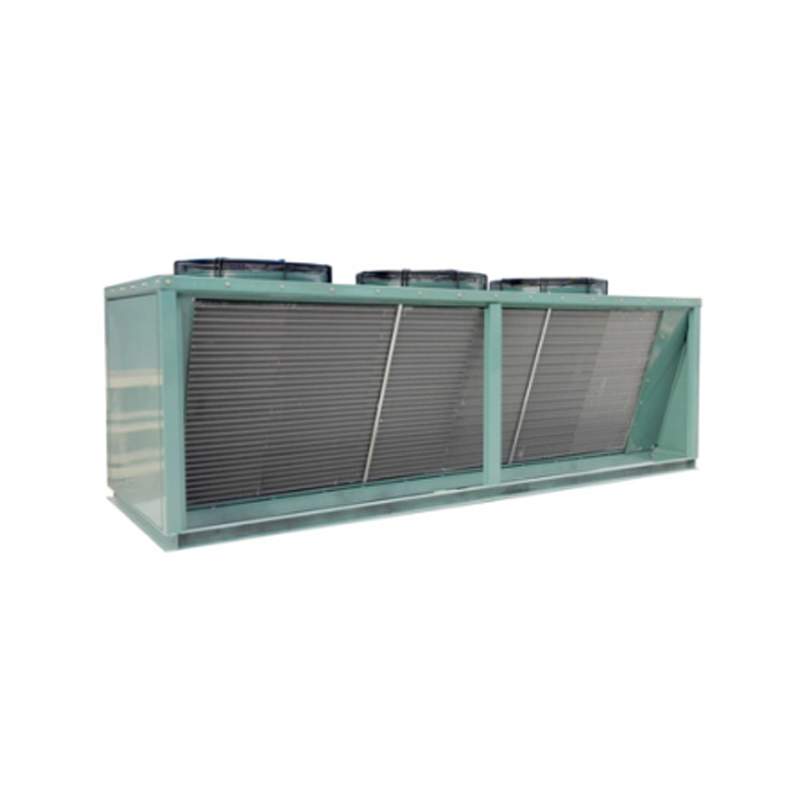
Final condensing unit evaporator matching should be verified during commissioning rather than assumed from the product selection.
Record performance after the system has stabilized.
Refrigerant-Side Checks
- Suction pressure
- Discharge pressure
- Evaporating temperature
- Condensing temperature
- Superheat
- Subcooling
- Compressor current
- Discharge temperature
- Sight-glass condition
- Oil level where applicable
Air-Side Checks
- Room temperature
- Air entering the evaporator
- Air leaving the evaporator
- Airflow direction
- Fan rotation
- Obstructions
- Warm zones
- Door-seal condition
- Product stacking clearance
Defrost Checks
- Frost removal
- Termination temperature
- Heater operation
- Drainage
- Drip time
- Fan restart
- Room-temperature recovery
- Ice formation around the drain
Control Checks
- Thermostat differential
- Compressor cycling
- Solenoid operation
- Pressure controls
- Alarm settings
- Sensor accuracy
- Phase protection
- Overload protection
Commissioning data creates a baseline for future maintenance and helps distinguish a selection issue from an installation or control problem.
FAQ
Should the evaporator capacity equal the condensing unit capacity?
The capacities should be compatible at the same evaporating temperature, condensing condition, refrigerant, and project load. Two identical nominal ratings may not be equal when their catalog conditions differ.
Can I choose an evaporator slightly larger than the condensing unit?
A slightly larger evaporator may be suitable in some applications, especially when a small TD or higher room humidity is required. However, the expansion valve, suction condition, compressor envelope, airflow, and controls must still be checked.
What happens when the evaporator is too small?
A small evaporator may create low suction pressure, long running time, poor pull-down, frost concentration, and insufficient airflow. The room may fail to reach temperature even though the condensing unit appears powerful enough.
What information is required for condensing unit evaporator matching?
At minimum, provide room dimensions, target temperature, product type, daily product load, entering product temperature, maximum ambient temperature, insulation, door usage, refrigerant, voltage, pipe length, and defrost requirements.
Should I select the condensing unit or evaporator first?
Begin with the heat-load calculation and operating conditions. The condensing unit, evaporator, expansion valve, controls, and refrigerant should then be selected as a coordinated system.
Does evaporator TD affect product quality?
Yes. A larger TD normally produces a colder coil and can increase moisture removal from the room air. Moisture-sensitive products may require a smaller TD and a larger evaporator surface.
Why does the system work well at night but poorly during the day?
Possible causes include high daytime ambient temperature, solar exposure, condenser-air recirculation, frequent door openings, warm product loading, or insufficient capacity at the actual design condition.
Can refrigerant charge correct mismatched equipment?
No. Correct refrigerant charge is essential, but adding or removing refrigerant cannot compensate for an undersized evaporator, insufficient condenser airflow, incorrect expansion valve, or poorly selected compressor.
How can I request a matched refrigeration system?
Prepare the project information listed in the worksheet and contact a technical supplier capable of checking the full system. You can review Rongyi Cold’s refrigeration equipment products or contact the technical team for component-selection support.
Conclusion
Reliable cold room performance depends on more than choosing a condensing unit and an evaporator with similar numbers on their labels.
Proper condensing unit evaporator matching requires a shared design basis: the same refrigerant, evaporating temperature, ambient condition, room temperature, cooling load, operating schedule, and control strategy. Evaporator TD, airflow, fin spacing, defrost, expansion-valve capacity, pipe design, and installation conditions must also be evaluated.
The most effective purchasing approach is to treat the cold room as one refrigeration system rather than a collection of separate components. A verified component combination can provide more stable room temperatures, better product protection, more predictable defrost recovery, and fewer commissioning problems.
For a project-specific recommendation, explore Rongyi Cold’s condensing units, evaporator air coolers, and refrigeration components, or submit your operating conditions through the contact page.
