

Table of Contents
Scroll compressor overheating occurs when motor and compression heat are not adequately controlled by refrigerant mass flow, suction condition, condensing pressure, electrical supply, operating cycle, and the compressor’s approved cooling method. A hot shell is a measured operating symptom, not a diagnosis. Scroll compressor overheating can result from several faults that require different repairs, measurements, and operating corrections. Keep the compressor stopped whenever its approved protection or service procedure requires it.
The diagnostic sequence should confirm the temperature at a defined, repeatable point, then examine suction-side heat and mass flow, high-side rejection, voltage and current, cycling history, and internal-condition evidence. Do not reset protection repeatedly or cool the shell externally without understanding the cause; both actions can hide scroll compressor overheating while increasing risk.
Confirm the Temperature Evidence and Limit
Measure shell and discharge-line temperature at repeatable, documented locations using a suitable contact sensor and insulation from ambient influence. Note time since startup, load, room temperature, outdoor or condenser-water temperature, compressor stage, and protection state. Scroll compressor overheating should be compared with the exact compressor application limit and measurement method, not a generic touch test.
Trend the rise from startup through stable operation and shutdown. A rapidly increasing discharge temperature suggests a different path from residual shell heat after a long run. Compare all compressor stages and note whether the sensor is affected by discharge-air recirculation, insulation, oil temperature, or a nearby hot pipe. Confirm instrument contact and response on a known reference before accepting an unexpected value. Scroll compressor overheating evidence should be repeatable after the same load is restored, not a single infrared spot on an unprepared surface. The fully enclosed scroll compressor page identifies the product family; obtain model-specific operating-envelope and protection information. This baseline prevents normal residual heat from being mislabeled as scroll compressor overheating.

Calculate the Suction Condition at the Compressor
Measure suction pressure and temperature at the compressor and calculate superheat with correct refrigerant data. Excessive evaporator or suction-line superheat raises the temperature entering compression. Very low mass flow also reduces refrigerant cooling in designs that depend on it. Scroll compressor overheating may therefore begin with a starved evaporator, restriction, low load, or incorrect valve control.
Use the pressure gauge reading guide to tie pressure to location and operating state, and the expansion valve guide for feed checks. NIST REFPROP supports refrigerant property calculations. Diagnose airflow and feed before adjusting charge.
Measure the Compression Ratio Drivers
Low suction pressure, high condensing pressure, or both increase compression ratio and discharge heat. Convert measured pressures consistently and compare them at the same operating instant. Scroll compressor overheating caused by high lift will not be resolved by treating only the motor circuit.
Identify why suction is low or head pressure is high: evaporator airflow, frost, liquid restriction, fan failure, dirty condenser, recirculation, hot ambient, low water flow, or control settings. The condenser coil cleaning guide and condenser fan guide provide high-side checks.
Verify Electrical Supply Under Operating Load
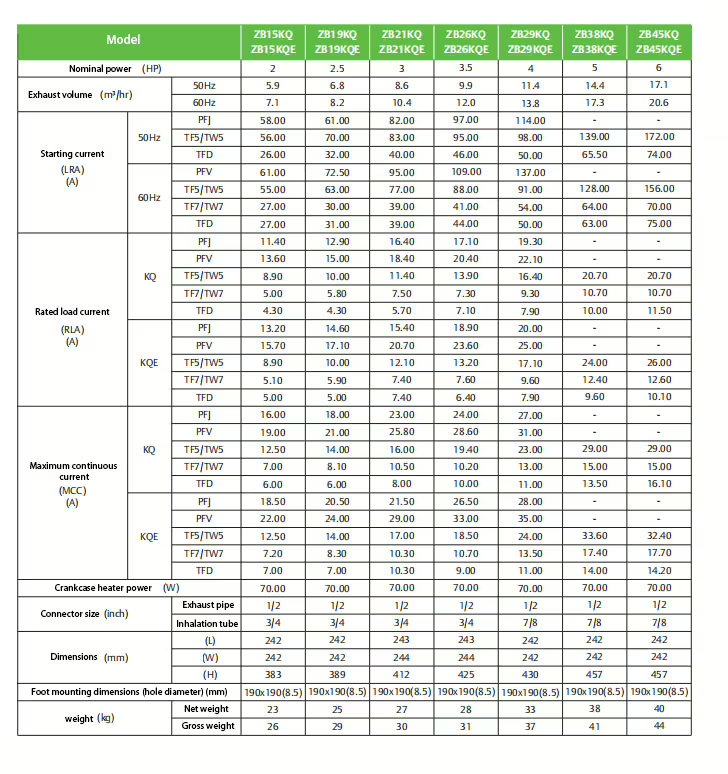
Measure voltage at the compressor while running, phase condition where applicable, current, terminal and contactor condition, protection settings, and evidence of loose or overheated connections. Unbalance, undervoltage, high current, or repeated starts can add motor heat. Scroll compressor overheating diagnosis should compare electrical values with the model data at the observed refrigeration condition.
Do not bypass overload or discharge-temperature protection to keep the unit running. Follow qualified electrical procedures and hazardous-energy control; the OSHA lockout/tagout standard is an official reference. The U.S. Department of Energy also publishes motor-system resources relevant to electrical performance.
Review Cooling Method and Installation Details
Some compressor applications rely on suction gas, injected refrigerant, airflow, oil cooling, or another approved method. Confirm that every specified cooling path and accessory is present, controlled, and sized for the refrigerant and operating envelope. Do not add an improvised fan or liquid injection as a universal response to scroll compressor overheating.
Inspect insulation and enclosure ventilation where applicable. A compressor mounted in trapped hot discharge air can see higher ambient exposure. Confirm oil type and charge procedure from documentation; incorrect lubricant or excessive dilution requires a different response from ordinary shell cooling.
| Evidence set | Possible mechanism | Next confirmation |
|---|---|---|
| High superheat and low suction | Starved feed, restriction, low load | Valve, airflow, subcooling, pressure drop |
| High head with hot condenser inlet | Heat-rejection or recirculation problem | Coil, fans, ambient, water flow |
| Normal pressures but abnormal current | Electrical or mechanical condition | Voltage, terminals, winding/protection data |
| Temperature spikes after frequent starts | Short cycling and incomplete stabilization | Controller history and stop trigger |
| Heat persists after system correction | Internal damage or incorrect application | Model limits, sound, oil, current, specialist review |
Read the Cycling and Protection History
Count starts, run time, off time, trip source, reset behavior, fan stages, and controller commands. Short runs prevent temperatures and oil distribution from stabilizing, while repeated automatic resets can restart a hot compressor. Scroll compressor overheating may be the consequence of the control sequence rather than the initial trip cause.
Preserve alarm history before clearing it. Correlate each event with suction, condensing pressure, voltage, and load. If protection opens, allow the approved recovery and investigate the trigger. Never assume a manually reset unit is healthy because it restarts.
Assess Internal Condition Only After System Causes
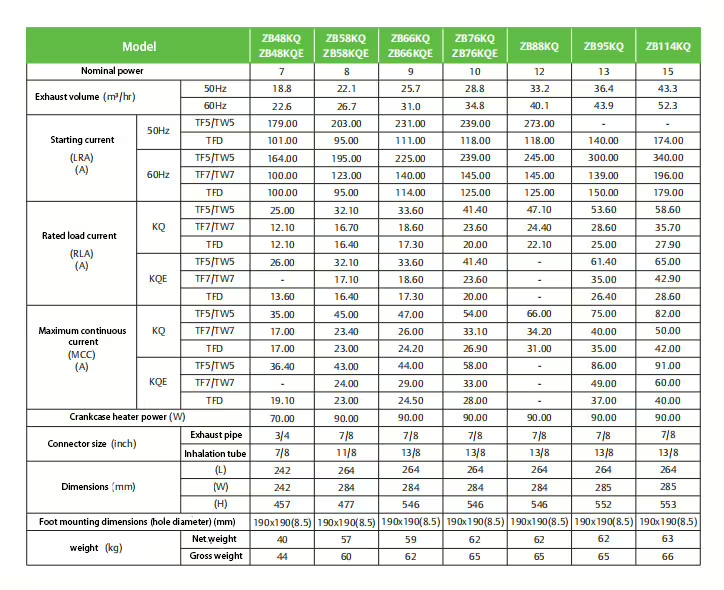
Abnormal sound, current, oil evidence, metal contamination, loss of capacity, or repeated protection after external conditions are corrected can support an internal problem. Do not diagnose mechanical damage from shell temperature alone. Scroll compressor overheating evidence should include the complete system state and service history.
If the refrigerant circuit is opened, use qualified recovery and applicable EPA recovery guidance. The ASHRAE Handbook supplies system fundamentals. Preserve samples and parts only when the service procedure calls for them.
Document the Corrected Operating Envelope
After repair, record temperatures, pressures, calculated superheat, ambient, fan or water state, voltage, current, run time, and protection status at comparable load. Confirm the compressor stays inside approved limits through startup and stabilized operation. This establishes proof that scroll compressor overheating was corrected.
Send the compressor model, refrigerant, measurements, controller trend, wiring data, photographs, and failure history through the contact page. A useful scroll compressor overheating review requires exact measurement locations and operating conditions.

Frequently Asked Questions
Is a hot compressor shell always abnormal?
No. Compare a measured point with model-specific limits and operating state before diagnosing scroll compressor overheating.
Can high superheat overheat a scroll compressor?
Yes. Hot return gas and low mass flow can contribute to scroll compressor overheating, depending on the approved cooling method.
Why check the condenser first?
Poor heat rejection raises condensing pressure and compression ratio, a common external driver of scroll compressor overheating.
Should an overload be reset repeatedly?
No. Preserve the trip evidence and find the cause. Repeated resetting can worsen scroll compressor overheating and damage risk.
What proves the problem is fixed?
Stable temperatures, pressures, electrical values, run time, and protection status within model limits confirm correction of scroll compressor overheating.
