

Table of Contents
Electric defrost vs hot gas defrost is a system-design decision, not a contest between two heater types. Electric defrost converts electrical input into heat at the evaporator. Hot gas defrost redirects high-pressure refrigerant gas so it condenses and releases heat inside the coil. Both can clear frost, but their piping, controls, failure modes, maintenance skills, and effects on the refrigeration plant are different.
A useful electric defrost vs hot gas defrost comparison begins with room temperature, frost load, evaporator size, number of coils, compressor arrangement, electrical capacity, service capability, and consequence of failure. This guide compares the two methods task by task so designers can choose the method that fits the whole cold-room system.
Begin With the Refrigeration Plant, Not the Heater
Electric defrost can be applied to a single evaporator with suitable heaters, wiring, contactors, high limits, and controls. Hot gas requires a dependable gas source plus refrigerant piping, isolation, pressure regulation, condensate handling, equalization, and coordinated compressor capacity. The electric defrost vs hot gas defrost decision therefore changes when one room becomes a multi-evaporator facility.
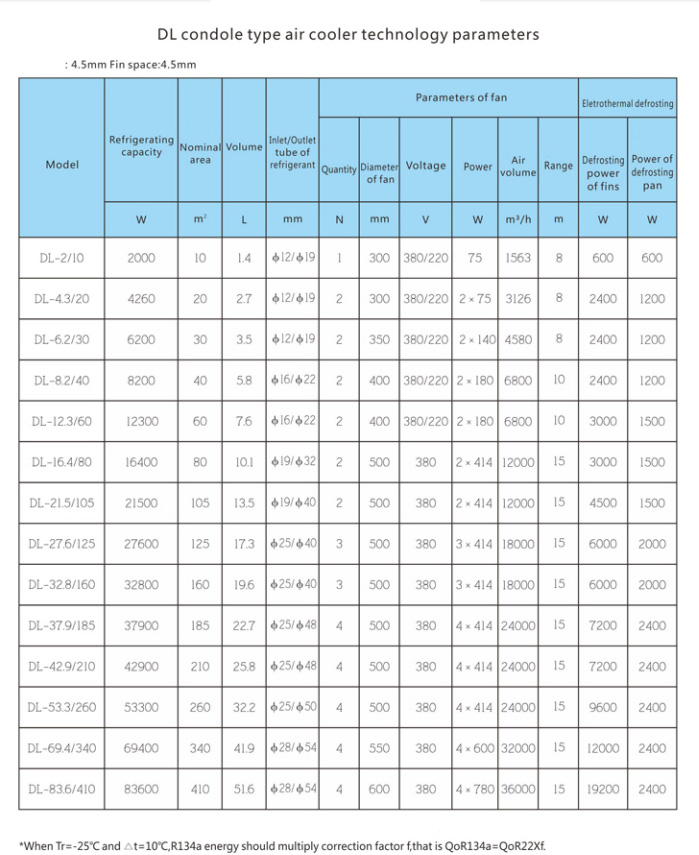
List every operating mode and the number of coils that may defrost together. Check whether the plant can provide hot gas at low load and whether the electrical service can support heater demand. The condensing unit and evaporator matching guide helps establish system balance; the air-cooled evaporator page provides product context.

Compare How Heat Reaches the Frost
Electric heaters commonly warm coil sections, drain pans, and drains from installed resistance elements. Heat distribution depends on element location, contact, watt density, and control. Hot gas warms refrigerant passages from inside, but distribution depends on circuiting, gas flow, condensate drainage, and pressure. Electric defrost vs hot gas defrost should be evaluated against where frost actually remains last.
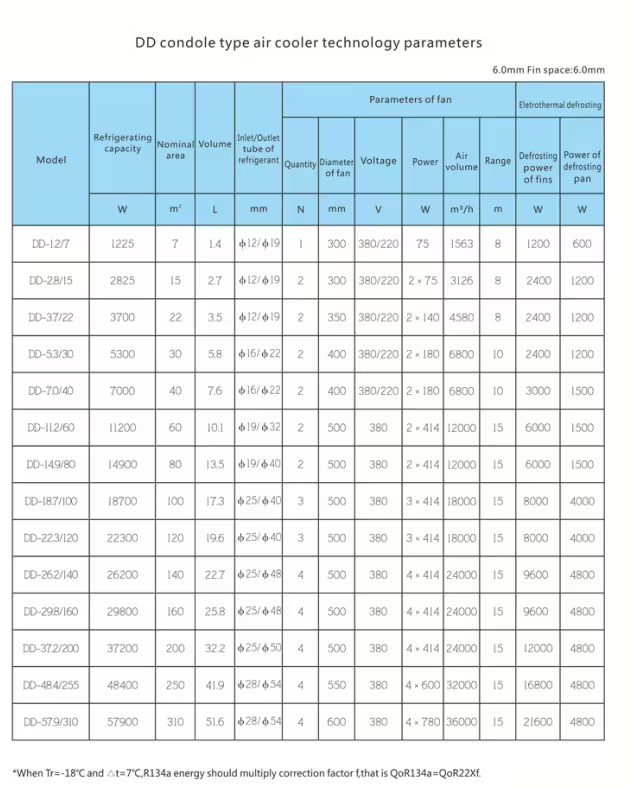
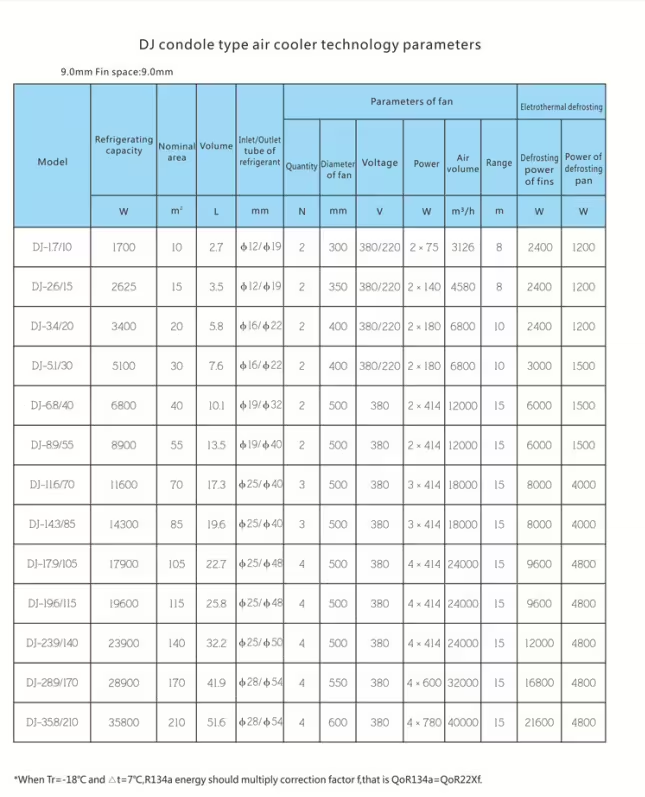
Neither method guarantees uniform melting. A failed heater can leave one band iced; poor hot-gas distribution can leave remote circuits cold. Review coil geometry and confirm the termination sensor represents the last-ice area. The evaporator selection guide explains why fin spacing and moisture load matter before comparing electric defrost vs hot gas defrost.
Price the Required Infrastructure, Not Just Components
Electric defrost needs feeder capacity, disconnects, protection, contactors or solid-state control where approved, high limits, heater wiring, and low-temperature cable management. Hot gas needs additional refrigerant pipe, valves, check valves, regulation, drain paths, insulation, supports, controls, and receiver capacity. Installation labor and commissioning complexity belong in electric defrost vs hot gas defrost evaluation even when specific prices are not discussed.
Consider retrofits separately from new plants. A room with adequate electrical infrastructure may favor one route, while a centralized plant designed with spare hot-gas capacity may favor the other. Congested piping can make hot gas difficult to install safely. Limited electrical service can make heaters impractical. Electric defrost vs hot gas defrost has no universal winner without the site constraints.
Treat Controls and Safeties as Part of the Method
Electric systems need proof that cooling feed has stopped, fans are off, heaters are energized only in the permitted state, high limits work, and failed contactors cannot overheat the coil. Hot gas systems need valve sequencing, pressure control, condensate routing, equalization, and protection from liquid return. Both require maximum-duration backup and fault alarms.
Write cause-and-effect tables for normal start, active defrost, termination, drip, fan delay, cooling restart, sensor failure, valve failure, and power recovery. The hot gas defrost design guide expands the refrigerant sequence. Electric defrost vs hot gas defrost should compare how easily the local controls team can verify every transition.
| Decision factor | Electric method | Hot-gas method | Project question |
|---|---|---|---|
| Heat source | Dedicated electrical input | Compressor discharge energy | Which source is available at peak defrost demand? |
| Distribution risk | Failed or poorly placed elements | Gas maldistribution or trapped condensate | Where does ice clear last? |
| Primary infrastructure | Power, protection, wiring | Refrigerant pipe, valves, regulation | What can the site install and maintain? |
| Major safety focus | Electrical isolation and overtemperature | Pressure, liquid movement, valve sequence | Can faults fail to a defined state? |
| Plant interaction | Electrical peak | Compressor and receiver operation | How many coils can defrost together? |
| Restart concern | Residual heat and water | Equalization and liquid return | How is stable cooling restored? |
Compare Energy at the System Boundary
Heater nameplate input is visible, while hot gas uses compressor energy that may be counted elsewhere. A fair electric defrost vs hot gas defrost study defines the boundary: heater or compressor input, defrost duration, fan downtime, room heat gain, recovery energy, simultaneous demand, and seasonal load. Comparing only input labels produces an incomplete answer.
Measure actual cycle duration and room recovery where possible. Hot gas can deliver heat rapidly but may disrupt the plant if poorly sequenced. Electric heat is direct but adds electrical demand and all supplied heat must later be removed. Use recognized system fundamentals from the ASHRAE Handbook; avoid unsupported universal savings claims.
Give Drainage and Restart Equal Weight
Both methods create meltwater. Pan slope, drain heat or freeze protection, traps, insulation, outlet protection, drip time, and fan delay can determine success more than the heat source. Electric defrost vs hot gas defrost is irrelevant if water remains in the pan and becomes the next ice block.
Hot gas adds an equalization step before reopening suction; electric systems add a need to verify heaters are off and residual heat has dissipated. In both cases, fans should restart only after drainage and coil recooling. The cold room defrost cycle guide provides a sequence for termination, drip, and fan delay.
Choose the Failure Modes the Team Can Manage
Maintenance staff may be comfortable testing heaters, contactors, insulation resistance, and high limits, or they may be stronger at diagnosing solenoid valves, regulators, pressure transitions, and refrigerant distribution. Electric defrost vs hot gas defrost should reflect available training, test instruments, spares, response time, and safe isolation procedures.
Apply hazardous-energy control for either method; see the OSHA lockout/tagout standard. Refrigerant work also requires qualified practice and applicable rules described by EPA Section 608 guidance. A technically efficient method that cannot be serviced correctly is a poor electric defrost vs hot gas defrost choice.
Make a Weighted Project Decision
Score each option against heat distribution, plant compatibility, electrical capacity, piping space, controls maturity, pressure risk, drainage, product sensitivity, redundancy, commissioning, maintenance competence, and expansion plans. Weight the factors by consequence, not convenience. Electric defrost vs hot gas defrost becomes transparent when assumptions and weights are documented.
For a system review, send room and evaporator data, frost pattern, plant diagram, electrical limits, refrigerant, simultaneous defrost requirement, and service constraints through the contact page. A defensible electric defrost vs hot gas defrost recommendation needs that project evidence. Refrigerant interventions must follow compliant handling; EPA recovery guidance supplies relevant context for the hot-gas side of an electric defrost vs hot gas defrost project.
Frequently Asked Questions
Which method is more energy efficient?
It depends on the system boundary, duration, plant loading, recovery, and controls. Electric defrost vs hot gas defrost cannot be settled from heater input alone.
Is hot gas always better for large systems?
No. Plant architecture, gas availability, piping, pressure control, maintenance skill, and risk determine electric defrost vs hot gas defrost suitability.
Do both methods need drip time?
Yes. Both produce meltwater, so electric defrost vs hot gas defrost comparison must include drainage and delayed fan restart.
Can an existing electric coil be converted easily?
Not automatically. Review pressure rating, circuiting, valves, receiver capacity, controls, and drainage before changing the electric defrost vs hot gas defrost design.
What information is needed to decide?
Provide load, room temperature, frost conditions, evaporator and plant data, utilities, layout, controls, skills, and failure consequences for electric defrost vs hot gas defrost.
