

Table of Contents
Refrigeration oil return is the movement of lubricant carried from the compressor through the system and back at a rate that maintains safe lubrication. Oil can collect in suction lines, risers, evaporators, headers, separators, and low points when velocity, piping geometry, refrigerant feed, defrost, or part-load operation is unsuitable for extended operating periods across changing loads.
The diagnosis should follow oil through the actual circuit instead of adding lubricant whenever the sight level falls. Excess oil charge can increase carryover and reduce heat transfer while the original trapped oil remains elsewhere. This guide combines piping review with operating evidence to make refrigeration oil return decisions defensible. It also separates a temporary redistribution event from a sustained lubrication shortage requiring immediate action.
Map Where Oil Can Leave, Separate, and Collect
Draw the compressor, discharge line, oil separator if used, condenser, receiver, liquid line, expansion device, evaporator, suction header, risers, traps, and every low point. Mark slopes, elevations, pipe sizes, capacity stages, and parallel branches. Refrigeration oil return cannot be understood from the compressor connection alone.
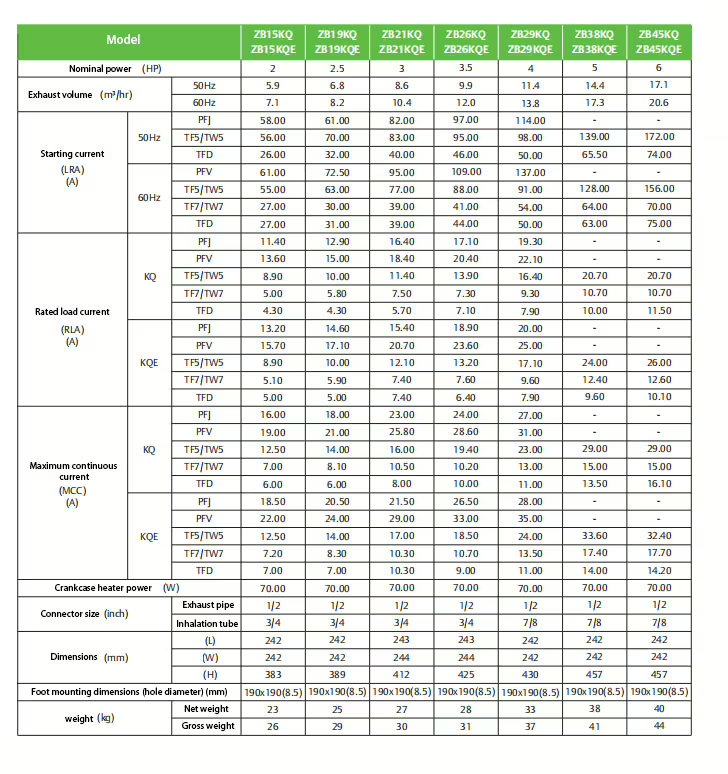
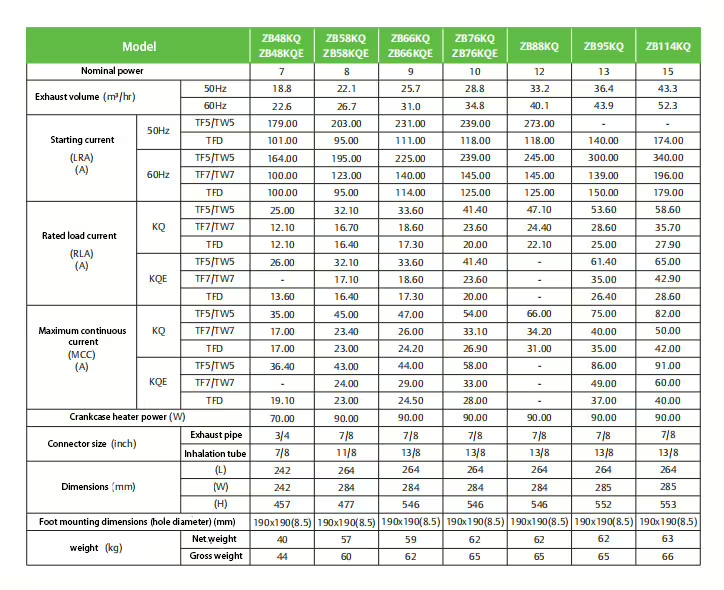
Identify the lubricant and refrigerant and confirm their approved combination. Use the semi-enclosed piston compressor page and model documentation for oil requirements. The equipment matching guide helps establish mass flow across the connected components.

Check Gas Velocity at Minimum and Maximum Load
Suction and discharge piping must carry oil at the lowest sustained capacity without excessive pressure drop at full load. Calculate each segment for refrigerant state, mass flow, pipe size, equivalent length, and elevation. Refrigeration oil return often fails during long part-load periods even though full-load operation appears normal.
Use reliable properties from NIST REFPROP and recognized design guidance such as the ASHRAE Handbook. Avoid universal velocity numbers detached from pipe orientation, refrigerant, oil, temperature, and system design.
Review Suction Risers as Capacity-Control Devices
A vertical riser needs enough velocity to lift oil. Systems with wide capacity range may require an approved double-riser arrangement or another engineered solution so the smaller path works at low load and the larger path opens at higher load. Refrigeration oil return should be checked for every compressor and unloading combination.
Inspect trap geometry, riser diameter, header entry, slopes, and whether field changes match the design. Too many traps add oil inventory and pressure loss; missing or incorrect arrangements can leave oil at the riser base. Do not add traps as a generic repair.
Make Horizontal Lines Drain in the Intended Direction
Horizontal suction lines should follow the approved slope and support plan so oil moves toward the compressor rather than settling in sags. Check pipe support, thermal movement, insulation hiding low points, and actual elevations. Refrigeration oil return can deteriorate after supports shift even when pipe diameter has not changed.
Headers serving parallel compressors or evaporators require careful connection geometry to distribute vapor and oil. Inspect inactive branches and shutdown drainage. A drawing without elevations may miss the exact pocket holding the oil.
Evaluate Whether the Evaporator Releases Oil
Low refrigerant velocity, poor distribution, excessive superheat in part of the coil, very low temperature, or long flooded conditions can leave oil on evaporator surfaces. Review circuiting, load, defrost, fan operation, expansion-valve control, and suction outlet arrangement. Refrigeration oil return may improve only after the evaporator operates through a suitable load or defrost sequence.
Use the evaporator selection guide and icing diagnostic guide to examine airflow and frost. Hot-gas systems also change oil movement during transitions; the hot gas defrost guide provides sequencing context.
| Oil evidence | Possible location or mechanism | Proof before action |
|---|---|---|
| Low level after long part load | Suction riser or evaporator logging | Operate approved higher load and trend level |
| Level falls after piping change | New sag, size, trap, or header issue | Survey elevations and compare drawing |
| Foamy or unstable oil | Refrigerant dilution or rapid return | Measure superheat and operating transition |
| High oil carryover | Excess charge, separation, wear, or high velocity | Review charge, separator, current, and history |
| Oil returns after defrost | Evaporator retained oil during cooling | Review circuiting, load, and defrost sequence |
Distinguish Trapped Oil From a True Oil Loss
Inspect for leaks and service history before adding oil. Account for oil removed with compressor replacement, separator service, filter changes, or recovered refrigerant. Refrigeration oil return problems move oil within the system; leaks or service remove it from the system. The remedies are not interchangeable.
If oil is added, use only the approved type and a documented quantity and procedure. Never mix lubricants without explicit approval. Refrigerant and oil handling should follow qualified practice and relevant EPA recovery guidance.
Watch Oil Level Through Operating Transitions
Record oil level at a repeatable stopped and running condition, then trend startup, load staging, defrost return, shutdown, and extended part load. A momentary level change is not the same as sustained starvation. Refrigeration oil return evidence should include pressures, temperatures, superheat, current, and compressor state. Photograph the sight level from the same angle and note whether oil is calm, foamy, or moving rapidly. On parallel systems, record every compressor and equalization component because one machine’s level can change when another stage starts. Refrigeration oil return should be judged after the approved stabilization period and across the event that normally causes the level to fall.
Allow the approved stabilization time before making a charge decision. If oil rushes back suddenly, investigate dilution and liquid-return risk. The compressor guide supplies related operating checks.
Recheck After Every System Modification
Compressor staging changes, refrigerant conversions, evaporator replacements, new risers, line rerouting, variable-speed operation, and different defrost schedules all change mass flow or oil behavior. Recalculate and recommission refrigeration oil return after these modifications rather than assuming the original piping remains suitable. Update the isometric, equivalent lengths, capacity table, and commissioning record so the next technician knows which refrigeration oil return assumptions were approved.
Apply hazardous-energy controls for intrusive inspection using the OSHA standard. Send the piping isometric, elevations, sizes, refrigerant, oil, load range, oil-level trend, and service history through the contact page. Those records let a refrigeration oil return review locate the likely inventory instead of recommending blind oil addition.

Frequently Asked Questions
Should oil be added whenever the sight level is low?
No. Check leaks, operating state, service history, and trapped inventory before changing the charge. Poor refrigeration oil return may be the cause.
Why does oil return only at full load?
Higher gas velocity may clear risers or evaporators that log oil during part load, indicating a refrigeration oil return design issue.
Are more oil traps always helpful?
No. Unnecessary traps add inventory and pressure loss. Refrigeration oil return traps must have a defined piping function.
Can defrost change oil level?
Yes. Defrost and restart can release oil retained in an evaporator, producing a visible refrigeration oil return event.
What information is needed for a piping review?
Provide an isometric with sizes and elevations, refrigerant, oil, capacity range, controls, pressures, temperatures, and oil trend for refrigeration oil return.
